
Mombasa
VIDEO: Mackenzie’s Lawyer Challenges Police to Prove Shakahola Victims Are Not in Heaven
MOMBASA, Kenya — The already extraordinary trial of self-proclaimed pastor Paul Nthenge Mackenzie took a dramatic turn this week when a defence lawyer representing the accused issued a striking challenge to police prosecutors at the Mombasa Law Courts, demanding that investigators produce evidence proving that the hundreds of followers who died in the Shakahola Forest were not, in fact, in heaven — as Mackenzie had promised they would be.
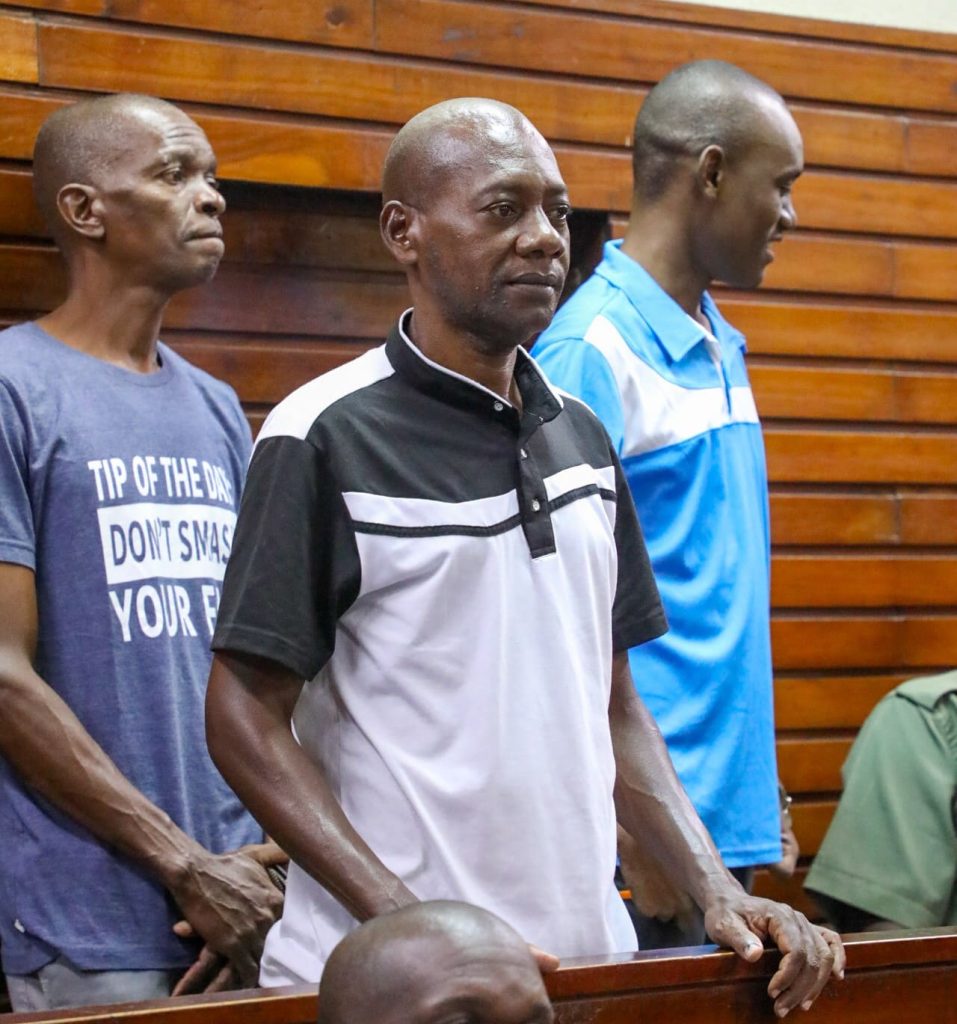
The audacious legal argument, raised before the court, cuts to the theological heart of one of Kenya’s most devastating criminal cases and sets up what legal observers are calling a collision between faith and criminal justice.
The Courtroom Challenge
According to sources at the hearing, the defence advocate challenged the prosecution and police to demonstrate, beyond the claims of forensic evidence and witness testimony, that the departed members of Mackenzie’s Good News International (GNI) Church did not fulfil the spiritual destiny their pastor had preached to them. The lawyer’s argument appeared to rest on the premise that if followers willingly fasted to death in pursuit of a heavenly reward their leader promised, then the State cannot definitively prove that promise was false — or that a crime was committed at all.
The argument, while provocative, reflects the broader defence strategy that has been visible throughout the proceedings: framing the mass deaths at Shakahola as acts of voluntary religious devotion rather than murder and manslaughter orchestrated by a manipulative cult leader.
The Weight of What Happened at Shakahola
The context in which this argument was made is impossible to ignore. By 2025, prosecutors said more than 400 bodies had been recovered from Shakahola Forest, located in Kilifi County on Kenya’s east coast. Autopsies revealed that the majority had died of hunger, but others — including children — appeared to have been strangled, beaten, or suffocated.
Prosecutors say Mackenzie and his Good News International Church organised a cult in which they ordered followers to starve themselves and their children to death to go to heaven before the world ended. Mackenzie, a former taxi driver, has been accused of inciting his followers to starve themselves to “meet Jesus”, using enforcers to ensure no one left the forest hideout alive.
Inside the forest, members were instructed to abandon schooling, healthcare services, and all engagement with government institutions. Parents were reportedly convinced to withdraw their children from school and relocate to Shakahola forest, often misleading relatives by claiming they were moving to Malindi to purchase land.
A Co-Accused Has Already Confessed
The defence’s theological challenge comes at a critical moment in the trial — one in which the prosecution has already secured a major breakthrough. Enos Amanya, also known as Hallelujah, one of the 29 accused persons facing charges over the Shakahola killings, pleaded guilty to 191 counts of murder before the High Court in Mombasa, ending nearly 22 months of denial since the case was first filed.
In his confession, Amanya painted a deeply disturbing picture of life inside Shakahola. He told the court that even Mackenzie’s own child died during the enforced fast — an infant who was still breastfeeding, buried in an area known as Galilee, one of nine villages established within the Shakahola forest.
The prosecution further revealed that as time went on, Mackenzie declared that entry into heaven required absolute obedience, with dissenters subjected to brutal punishment — tied with binding wire and beaten with sticks and tree branches until death.
A Trial on Multiple Fronts
Mackenzie is simultaneously facing charges across several courts. Mackenzie and 31 others are facing 191 murder counts arising from the deaths of more than 450 members of the outlawed Good News International Church who died through starvation and other causes in the Shakahola forest.
He has also been charged with organised criminal activity, radicalisation, and facilitating terrorism. Al Jazeera Most recently, a self-proclaimed preacher in Kenya linked to an infamous starvation cult that killed more than 400 people was charged over a further 52 deaths following the discovery of bodies in the remote village of Kwa Binzaro, around 30 kilometres from Shakahola along the Indian Ocean coast.
The prosecution case featured testimony from 96 witnesses, including survivors, medical experts, forensic specialists and investigators, with nearly 500 exhibits presented — demonstrating, prosecutors argued, that the deaths in Shakahola were neither accidental nor voluntary, but the outcome of a carefully orchestrated campaign of indoctrination.
The Legal and Moral Stakes
The defence lawyer’s “prove they are not in heaven” challenge, however theatrically framed, raises a genuine question that courts are not designed to resolve: can a secular criminal justice system adjudicate matters of eternal destiny? Legal analysts note that the answer, under Kenyan law, is straightforward — the State does not need to disprove a religious claim. It only needs to prove, beyond reasonable doubt, that unlawful acts caused the deaths of real people.
Fresh testimony before the High Court in Mombasa revealed that Mackenzie urged his flock to detach themselves from society and prepare for what he framed as a “direct ascent to heaven” — language the prosecution has consistently argued was weaponised to manipulate vulnerable followers into accepting their own deaths and the deaths of their children.
Other witnesses, including former pastors, said Mackenzie’s teachings gradually trained followers to view suffering, deprivation, and even death as acts of spiritual obedience — the indoctrination so methodical and severe that followers came to view death by fasting not as cruelty, but as the sole passage to meet Jesus.
What Comes Next
With the prosecution having exhausted all its witnesses and evidence in two of the Shakahola cases, both the defence and the prosecution are expected to submit their respective closing arguments before the court determines whether Mackenzie and his co-accused have a case to answer.
Mackenzie has remained in custody at Shimo la Tewa Maximum Security Prison since his arrest in April 2023 and has consistently maintained his innocence. The next hearing in the Kwa Binzaro-related case was scheduled for mention on March 18, 2026
For the families of more than 400 dead — many of them children — the question of whether their loved ones are in heaven is deeply personal. But in the courts of Mombasa, the only question that matters is whether the man who sent them there should be held criminally responsible for their deaths.
The Shakahola massacre trial continues before multiple courts in Mombasa and Shanzu. It is widely regarded as one of the most significant criminal proceedings in Kenya’s post-independence history.










The Cheeky Couple Video That Broke Social Media This Week

VIDEO: Mackenzie’s Lawyer Challenges Police to Prove Shakahola Victims Are Not in Heaven

How to Apply for Kenya Utalii College Through KUCCPS — Diploma and Certificate Applications Now Open

Russian TikToker’s Videos Include Encounter with Older Woman, Raising Further Consent Concerns

East Africa’s Richest Musicians 2025: The Wealth Rankings Revealed

Why Gachagua Was Absent at Raila’s Farewell, According to His Camp
-

 Gossip1 week ago
WATCH: Mchungaji feasts On Kondoo and is captured on CCTV
-

 Gossip2 days ago
Watch Video: Vihiga Man Takes Selfie Of Wife and Pastor During Mechi
-

 Gossip5 days ago
Video: Boyfriend Catches Girlfriend Getting Chewed In The Car He Just Bought
-

 Gossip1 day ago
Morara Kebaso’s Secret Mombasa Getaway With Slay Queen Laid Bare in Shocking Audio Leak
-
 Entertainment4 days ago
VIDEO: Woman Who Claimed to Be Bahati’s Mother Is Not Biologically Related to Him
-

 Gossip1 day ago
VIDEO: Kenyan Female Chemist Attendant Goes Viral After Video Shows Her Helping Male Customer Put On Protection — Public Reacts
-

 Entertainment4 days ago
Harmonize Paid 50,000 Euros (KSh 7.5 Million) to Settle Divorce With Italian Ex-Wife Sarah Michelotti — Full Story
-

 Gossip5 days ago
Watch Video: Rayvanny Finally Breaks Silence on Macvoice Fallout: “I Had Plans for Him