
News
Tanzania’s Independence Day Passes Under Heavy Security as Planned Protests Fail to Materialize
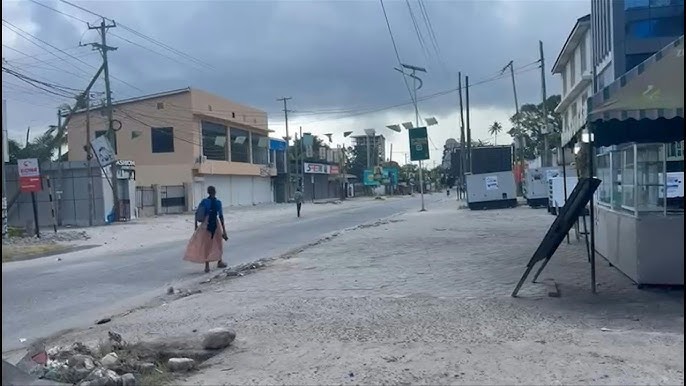
Tanzania’s streets remained largely deserted on Tuesday as the nation’s 64th Independence Day unfolded under a blanket of security forces and an atmosphere of uncertainty, following government warnings against planned anti-government demonstrations.
ALSO READ:Tanzania on Edge as Independence Day Transforms Into Day of Dread Amid Election Fallout
By midday, no significant protests had emerged in major cities including Dar es Salaam, Arusha, and Mwanza, despite weeks of online calls for nationwide demonstrations against the government’s handling of post-election violence that left an unknown number dead in late October.
A Nation Under Watch
Residents across multiple urban centers reported unusually quiet streets, with many choosing to remain indoors amid uncertainty over whether demonstrations would occur. The government had deployed heavy security throughout the country, with police and military personnel visible at roadblocks and key intersections.
Motorists who ventured out encountered frequent checks at roadblocks, where officers questioned them about their destinations. The heightened security measures came after authorities issued a nationwide ban on protests and canceled traditional Independence Day celebrations—a humiliating acknowledgment of the crisis facing President Samia Suluhu Hassan’s administration.
The Shadow of October’s Violence
The planned demonstrations were intended as a continuation of protests that erupted following Tanzania’s October 29 general election, in which Hassan was declared winner with nearly 98 percent of the vote after main opposition candidates were disqualified from participating.
Human Rights Watch reported that activists had called for peaceful demonstrations against police use of lethal force during the election period, when hundreds were reportedly killed. The United Nations and international human rights organizations have documented widespread allegations of extrajudicial killings, enforced disappearances, and mass detentions.
The government has acknowledged using force but disputes the casualty figures and maintains that security forces acted appropriately against what officials characterized as an attempted coup rather than legitimate protests.
Pre-emptive Crackdown
In the weeks leading up to December 9, Tanzanian authorities conducted a systematic campaign to prevent demonstrations from occurring. Police announced they were arresting people for online offenses and closely monitoring social media calls for protests.
The arrests began in mid-November and continued through early December, with at least ten activists and opposition supporters confirmed detained. Among those arrested were individuals accused of circulating provocative messages on social media and organizing WhatsApp groups to coordinate demonstrations.
Home Affairs Minister George Simbachawene characterized the planned demonstrations as unlawful and tantamount to an attempted coup, noting that no formal application had been submitted and no organizer was identified. He urged citizens without essential reasons to leave their homes to remain indoors on December 9.
Videos and Counterclaims
Despite the apparent calm in most areas, videos circulating on social media showed crowds in cities like Mbeya and Mwanza chanting slogans demanding Hassan’s resignation. However, police dismissed these clips as old footage and maintained that the country remained peaceful nationwide.
The conflicting narratives highlighted the information challenges facing Tanzania, where internet shutdowns, blocks on websites, and restrictions on social media accounts have raised fears of digital censorship. The government had previously imposed internet blackouts during the October violence.
International Pressure Mounts
The crisis has drawn significant international attention and condemnation. The UN Office of the High Commissioner for Human Rights called for lifting the blanket nationwide ban on protests, describing it as overbroad and disproportionate.
The United States has indicated it is reviewing its relationship with Tanzania over concerns about the violence against civilians, religious freedom, and obstacles to free speech. Several European nations and human rights organizations have issued statements expressing alarm at the deteriorating situation.
Hassan directed that funds originally allocated for Independence Day celebrations be used instead to restore infrastructure damaged during the election unrest—a practical measure that nonetheless underscored the severity of the damage done to both property and national unity.
A Fragile Calm
The day passed without the major violence many had feared, though activists on social media suggested any demonstrations might begin later in the afternoon, echoing patterns from previous protest movements in the region.
The absence of large-scale protests on December 9 does not resolve the underlying tensions that have fractured Tanzania’s longstanding reputation for stability. The country faces profound questions about democratic participation, the use of force by security services, and the path toward reconciliation.
Hassan has established a commission to investigate the October violence, though the opposition has dismissed it and demanded an independent international inquiry. The government has refused to release an official death toll, stating that doing so would amount to celebrating deaths.
As the day concluded, Tanzania found itself in an uneasy stalemate—demonstrations largely forestalled through security measures and pre-emptive arrests, but the grievances that sparked them unresolved. Whether this represents a definitive end to the protest movement or merely a temporary pause remains an open question as the nation grapples with its gravest political crisis in decades.
Follow us on X





VIDEO: Every Goal Scored in the Premier League This Weekend — Matchweek 30

EPRA Sets Fuel Prices for March-April 2026 — Here Is What You Will Pay

Israeli Government Announces Fully Funded Postgraduate Scholarships for Kenyans

Russian TikToker’s Videos Include Encounter with Older Woman, Raising Further Consent Concerns

East Africa’s Richest Musicians 2025: The Wealth Rankings Revealed

Why Gachagua Was Absent at Raila’s Farewell, According to His Camp
-

 Gossip5 days ago
VIDEOS: What Happened In Naivasha During The Weekend Has Boyfriends Crying
-

 Gossip1 week ago
Morara Kebaso’s Secret Mombasa Getaway With Slay Queen Laid Bare in Shocking Audio Leak
-

 Gossip1 week ago
VIDEO: Kenyan Female Chemist Attendant Goes Viral After Video Shows Her Helping Male Customer Put On Protection — Public Reacts
-

 Gossip1 week ago
Watch Video: Vihiga Man Takes Selfie Of Wife and Pastor During Mechi
-

 Gossip1 week ago
The Cheeky Couple Video That Broke Social Media This Week
-

 Mombasa1 week ago
VIDEO: Mackenzie’s Lawyer Challenges Police to Prove Shakahola Victims Are Not in Heaven
-

 Education1 week ago
How to Apply for Kenya Utalii College Through KUCCPS — Diploma and Certificate Applications Now Open
-

 Education1 week ago
KUCCPS 2026: Marketable Degree Programmes With the Lowest Cut-Off Points in Kenyan Universities