
Education
Study Confirms Kenya’s Position as Africa’s Third-Best English-Speaking Nation
New global assessment places Kenya ahead of several major African nations in language competency
Kenya has claimed the third spot among African countries for English language proficiency, according to newly released findings from Education First (EF), a leading international education organization specializing in language instruction.

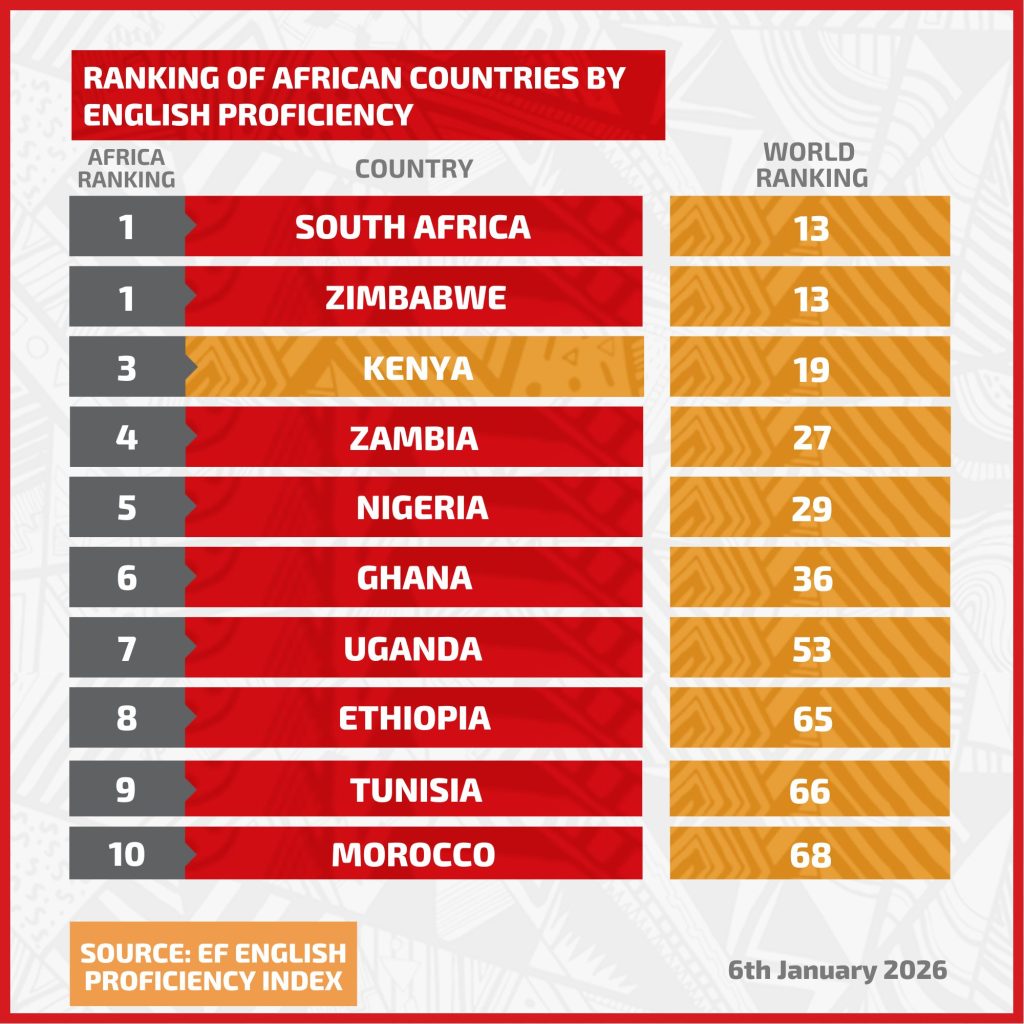
The 2025 English Proficiency Index (EPI), published by EF, positions Kenya behind only South Africa and Zimbabwe on the continental rankings, surpassing prominent nations including Nigeria, Uganda, Ethiopia, and Morocco.
The comprehensive assessment evaluated English language capabilities among adults across 123 countries and territories, drawing on data from more than 2.2 million participants who completed the EF Skills Evaluation Technology (EF SET) during the previous year. The participant demographic consisted of 54 percent female and 46 percent male respondents, with an average age of 26 years.
Continental Rankings Reveal Regional Patterns
South Africa emerged as Africa’s leader in English proficiency, with Zimbabwe securing second place. Zambia rounded out the top four positions behind Kenya. These four nations share notable characteristics, including the widespread integration of English into governmental operations, educational frameworks, and media industries.
Kenya’s strong performance reflects the enduring linguistic legacy of British colonial rule, during which English was instituted as the official administrative language. The language continues to maintain official status and widespread usage throughout the country’s institutions.
The rankings placed Nigeria in fifth position, followed by Ghana and Uganda in sixth and seventh places respectively. Ethiopia, Tunisia, and Morocco completed the continental top ten in eighth, ninth, and tenth positions.
According to the report’s analysis, the strong English proficiency demonstrated by Nigeria, Uganda, and Ghana correlates directly with the language’s official status in these countries. Ethiopia presents an interesting exception, where English maintains widespread educational use despite lacking official recognition.
Global Context and Economic Implications
The report emphasized the economic significance of English proficiency in today’s interconnected world. “English proficiency reflects a workforce’s capacity to engage with the global economy beyond national boundaries,” the assessment noted. “In economies transitioning toward knowledge-based sectors, comfort with English often signals adaptability to international standards.”
On the global scale, Kenya achieved a respectable 19th position overall. The Netherlands topped the worldwide rankings, followed by Croatia, Australia, and Germany in the leading positions. The remaining global top ten included Norway, Portugal, Denmark, Sweden, Belgium, and Slovakia.
The findings underscore the continuing importance of English language skills as economies across Africa and globally increasingly integrate with international markets and knowledge-based industries.
Follow us on X









Fatal Consequences: Man Loses Life After Singing Tutam at Sifuna’s Kakamega Rally

KRA Targets Nil Tax Returns Filers as New Compliance Crackdown Takes Effect

Russian Man’ Unmasked: Govt Officially Names Vladislav Luilkov in Non-Consensual Recording Scandal

Russian TikToker’s Videos Include Encounter with Older Woman, Raising Further Consent Concerns

East Africa’s Richest Musicians 2025: The Wealth Rankings Revealed

Why Gachagua Was Absent at Raila’s Farewell, According to His Camp
-
 Gossip1 week ago
Russian TikToker’s Videos Include Encounter with Older Woman, Raising Further Consent Concerns
-

 Gossip4 days ago
Foreign Tourist’s Viral Uganda Video Ignites Social Media Frenzy Over “Intense Cultural Exchange”
-

 Gossip6 days ago
Woman Unalives Herself On Facebook Live As Viewers Begged Her To Stop
-

 Jobs1 week ago
Kenya Government to Recruit 50,000 Police Officers and Teachers in 2026: Major Public Sector Expansion Announced
-

 Education1 week ago
KNEC to Introduce New KCSE Certificates as Digital Era Begins
-

 Gossip4 days ago
Fake Model Casting Agency Under Fire After Disturbing Video Goes Viral
-

 Nairobi6 days ago
US Embassy in Nairobi Closed Monday for President’s Day Federal Holiday
-

 Education5 days ago
KUCCPS Releases Subject Requirements for All Degree Clusters: What Students Must Know Before Applying