
Nairobi
Parliament Rejects IEBC’s 2027 Election Budget, Orders Commission to Cut Costs
Kenya’s National Assembly Justice and Legal Affairs Committee has pushed back against the Independent Electoral and Boundaries Commission’s spending proposals for the 2027 General Election, directing the electoral body to scale down its financial estimates in line with the country’s current economic realities.
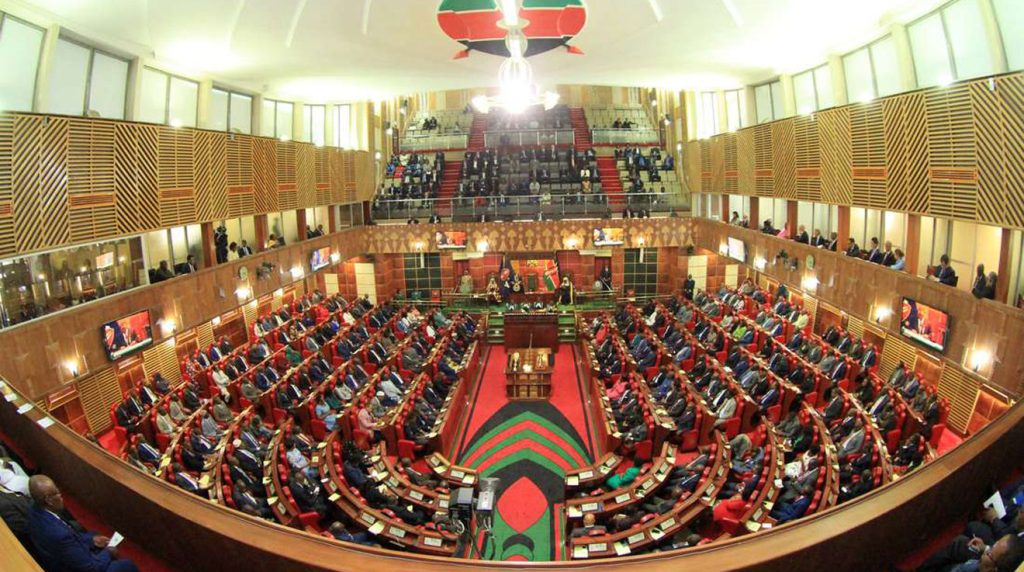
The parliamentary committee, which scrutinises the budgetary allocations of constitutional commissions, raised objections to several key spending requests during a sitting on February 24, 2026, questioning the necessity and timing of major capital expenditure items at a time when the government is under pressure to reduce public spending.
Ksh 1.5 Billion Land Purchase Request Faces Scrutiny
Among the proposals that drew immediate parliamentary pushback was the IEBC’s request for Ksh 1.5 billion in the 2026/2027 financial year to purchase land for the construction of a new election operations centre.
Kanduyi Member of Parliament John Makali challenged the commission to first justify the request by disclosing how much it currently pays in rent for its existing office spaces, arguing that the committee could not responsibly approve a billion-shilling land acquisition without first establishing whether it represented value for money.
“One of your requests to the committee is to allocate the Commission Ksh 1.5 billion to fund the purchase of land. I still have a very big issue with this particular request. Maybe I will change my mind once we are told the amount of rent we are currently paying for the offices we occupy, because we are thinking about reducing election costs,” Makali stated.
The lawmaker’s position signals that the committee is unlikely to approve the request without a detailed cost-benefit analysis comparing long-term ownership against the commission’s current rental obligations.
MPs Question Ksh 6.2 Billion KIEMS Kit Replacement
The committee also raised concerns over the IEBC’s proposal to spend Ksh 6.2 billion on the replacement of Kenya Integrated Elections Management System (KIEMS) kits, the biometric technology used to identify voters and transmit results during general elections.
Rarieda MP Otiende Amollo questioned whether a full replacement of the devices used during the 2022 General Election was necessary, suggesting that upgrading the existing equipment could achieve the same outcome at a fraction of the cost.
“Can’t we save the Ksh 6 billion by upgrading what we have?” Amollo posed directly to IEBC officials during the committee session.
The question reflects broader parliamentary sentiment that the commission must explore cost-saving alternatives before committing to large-scale procurement in an already strained fiscal environment.
IEBC Defends Ageing Vehicle Fleet Request
The commission also appeared before the committee seeking additional funding to replace its fleet of vehicles, which IEBC Vice Chairperson Fahima Araphat described as outdated and no longer fit for the demands of nationwide electoral operations.
“I want to inform this committee that when we came in, we realised that the Commission is using very old vehicles, and we must be able to move around as a Commission to be able to discharge our duties, including those of voter registration, verification and all others,” Araphat told lawmakers.
The commission argued that its ability to conduct voter registration and verification drives across the country, particularly in remote and hard-to-reach areas, is directly compromised by the state of its current vehicle fleet.
Boundary Review Effectively Dead Before 2027 Polls
Beyond the budget disputes, the IEBC has previously acknowledged a separate but equally significant challenge — the review of electoral constituency boundaries, a constitutional obligation the commission has effectively declared impossible to complete before the next general election.
Under Article 89(4) of the Constitution of Kenya, any boundary delimitation exercise must be concluded at least 12 months before a general election. With the 2027 polls on the horizon, that constitutional deadline falls on August 10, 2026 — leaving the commission with approximately three months to complete a process that ordinarily takes two years.
The situation has been further complicated by a High Court ruling that invalidated the 2019 Census data for 14 constituencies across Garissa, Wajir and Mandera counties, with a Court of Appeal order maintaining the status quo. The ruling effectively bars the commission from using the affected population data to determine new constituency quotas, a prerequisite for any boundary review.
Faced with these legal and logistical constraints, the IEBC has opted for a phased approach to boundary delimitation. The practical consequence is that a significant number of constituencies will go into the 2027 General Election with outdated boundaries, raising concerns about whether the principle of equal representation will be upheld.
A Commission Under Pressure
The parliamentary scrutiny of the IEBC’s budget comes at a sensitive moment for the commission, which is simultaneously navigating legal challenges, tight constitutional deadlines and public expectations ahead of what promises to be a highly competitive 2027 electoral cycle.
Lawmakers have made clear that while they recognise the commission’s operational needs, approvals will not be forthcoming without greater transparency, detailed justifications and a genuine effort to reduce the overall cost of conducting elections in Kenya.
The IEBC is expected to return to the committee with a revised budget proposal addressing the concerns raised, though no formal deadline for that submission has been publicly announced.















The 10 Tribes With the Most Beautiful Women in Kenya in 2026, According to Public Opinion

Roysambu’s Nimmo Breaks Silence on Viral Russian Man Encounter: “It Was Just Dinner”

Parliament Rejects IEBC’s 2027 Election Budget, Orders Commission to Cut Costs

Russian TikToker’s Videos Include Encounter with Older Woman, Raising Further Consent Concerns

East Africa’s Richest Musicians 2025: The Wealth Rankings Revealed

Why Gachagua Was Absent at Raila’s Farewell, According to His Camp
-

 Gossip1 week ago
Foreign Tourist’s Viral Uganda Video Ignites Social Media Frenzy Over “Intense Cultural Exchange”
-

 Gossip1 week ago
Woman Unalives Herself On Facebook Live As Viewers Begged Her To Stop
-

 Gossip1 week ago
Fake Model Casting Agency Under Fire After Disturbing Video Goes Viral
-
 Nairobi1 week ago
US Embassy in Nairobi Closed Monday for President’s Day Federal Holiday
-
 Education1 week ago
KUCCPS Releases Subject Requirements for All Degree Clusters: What Students Must Know Before Applying
-
 Forecast1 week ago
Will It Rain This Week? Heavy Downpours Expected in Central Kenya, Rift Valley and Coastal Regions
-
 News1 week ago
‘My Position is Safe’: DP Kindiki Shuts Down Political Speculation
-

 Gossip5 days ago
Russian Man’ Unmasked: Govt Officially Names Vladislav Luilkov in Non-Consensual Recording Scandal