
Nairobi
Nairobi Floods: Vehicles Submerged, 20 Rescued as Flash Floods Devastate Capital on March 6, 2026
Heavy rainfall on Friday evening triggered widespread flooding across Nairobi, paralyzing the city’s roads, displacing residents, and prompting emergency rescue operations by the Kenya Red Cross and Kenya Defence Forces.
City Brought to a Standstill
Nairobi ground to a halt on the evening of Friday, March 6, 2026, as torrential rainfall unleashed flash floods across dozens of neighbourhoods, submerging vehicles, cutting off roads, and forcing hundreds of residents from their homes.
Streets were submerged and infrastructure damaged, leaving residents stuck in traffic for hours as the floods tested the capital city’s disaster preparedness. Daily Nation
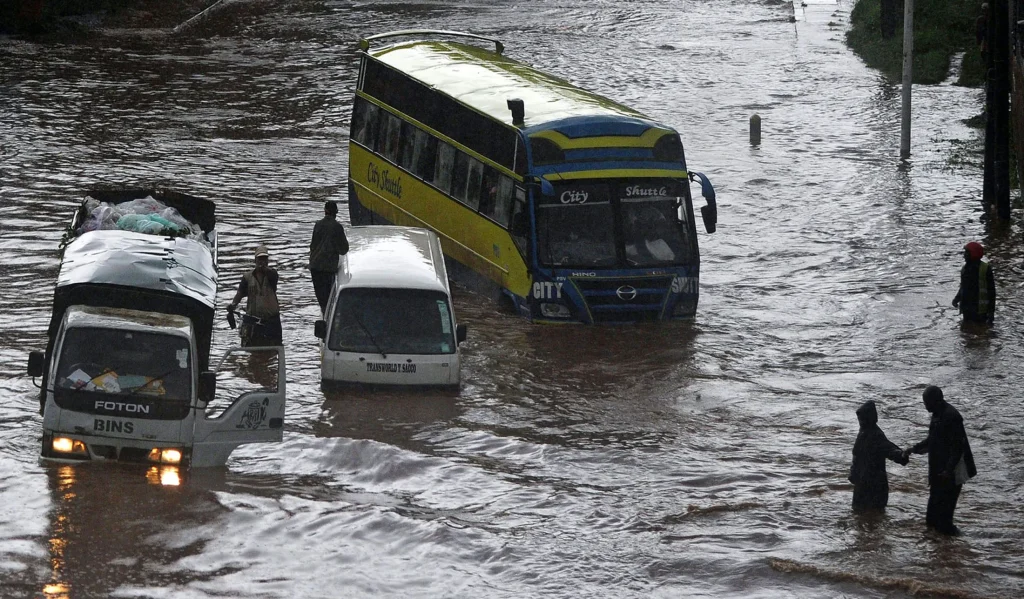
At the Sunken Car Park along Aga Khan Walk in the CBD, floodwater rose halfway up several parked vehicles, while many commuters reported being stuck in traffic jams for hours as waterlogged roads and stalled vehicles brought movement to a near standstill. The Star
Among the most dramatic scenes of the evening, a 33-seater public service vehicle was filmed nearly three-quarters submerged on Uhuru Highway near the Haile Selassie Exit of the Nairobi Expressway. Passengers were captured forming a human chain to escape the rising water and reach higher ground — footage that quickly went viral across social media platforms.
Roads Cut Off Across the Capital
The flooding rendered numerous key arterial roads impassable. Affected stretches included sections of the Central Business District, Uhuru Highway, Mbagathi Way, Mombasa Road between South C and the JKIA Exit, Thika Superhighway between Githurai and Kahawa Sukari, Jogoo Road, Lunga Lunga Road, Enterprise Road, and Lang’ata Road near T-Mall.
Flooding on Mbagathi Way left motorists stranded and slowed down the response of emergency services, while commuters were forced to abandon public transport and wade through flooded streets. Daily Nation
In a bid to ease the crisis, Moja Expressway Company, which operates the Nairobi Expressway, opened the road to motorists free of charge on Friday night to provide a safer alternative for drivers navigating the flooded Mombasa Road, later extending the free usage offer to Saturday morning. Daily Nation
Rescue Operations Launched
The Kenya Red Cross mobilized rapidly as the scale of the disaster became clear. “Heavy rainfall has caused flooding in several parts of Nairobi and surrounding areas, leading to road closures, property damage, displacement and distress among affected communities,” the organization said in an official statement.
By Saturday morning, the Kenya Red Cross confirmed that first responders had rescued 20 people stranded along Kirinyaga Road and moved them to safety.
The Kenya Defence Forces also deployed its Rapid Response Unit to assist with the crisis. The KDF conducted traffic control operations and facilitated the towing of five stalled vehicles to clear the Kariokor–Ring Road roundabout, while also establishing traffic management at Mbagathi Roundabout.
Neighbourhoods Submerged, Families Displaced
The flooding was not confined to the city’s road network. Entire residential neighbourhoods were inundated, with water levels reaching knee height in some areas. Affected estates included Pipeline and Embakasi, where Kware Road was cut off, as well as Mukuru Kwa Njenga, Reuben, Viwandani, Kibra, Mathare, Huruma, and Baba Dogo — several of which were also impacted by the swelling of the Nairobi River.
Additional areas hit by the floods include Bosnia, South B, South C, Nairobi West, Lang’ata, Umoja 3, Chokaa, Njiru, Ruai, Utawala, Roysambu, Kahawa West, Githurai, Loresho, and parts of Westlands. Some residents in the worst-affected zones were forced to seek alternative accommodation overnight as floodwaters swept through their homes.
More Rain Expected — Warnings Remain in Force
Residents and businesses should brace for continued disruption. The Kenya Meteorological Department warned that heavy rainfall exceeding 20mm within 24 hours is expected to continue across several parts of the country from March 3 to 9, 2026, with rainfall forecast to peak between March 4 and 7 before reducing in most areas by March 8. The Star
Residents in all mentioned areas have been advised to be on the lookout for potential floods, flash floods, and poor visibility, with authorities noting that floodwaters can appear in places where it has not rained heavily locally — particularly in downstream locations. Kenyans.co.ke
Frustration Grows Over Infrastructure Failures
The disaster has renewed public anger over the city’s chronic drainage failures. Residents took to social media to criticise the Nairobi City County Government, blaming the flooding on blocked drainage systems, uncollected garbage, and rapid urban development without adequate infrastructure — factors they say have left the city dangerously exposed whenever heavy rains fall. Daily Nation
The heavy rains have heightened calls for urgent action to unclog drains and improve stormwater management to prevent recurring floods. CapitalFM For many Nairobians, Friday’s disaster was not a surprise — it was a recurring failure of urban planning meeting an increasingly intense rainy season.
Residents are advised to avoid crossing flooded roads and drainage channels, monitor official updates from the Kenya Meteorological Department, and report emergencies to the Kenya Red Cross or local authorities.
















Video: Mbosso Gifts Baby Mama a New Car Amid Ramadan Season

Video! Johana Ng’eno’s Widow Swore By The Bible To Remain Loyal and Respect Mother Inlaw

Nairobi Floods: Vehicles Submerged, 20 Rescued as Flash Floods Devastate Capital on March 6, 2026

Russian TikToker’s Videos Include Encounter with Older Woman, Raising Further Consent Concerns

East Africa’s Richest Musicians 2025: The Wealth Rankings Revealed

Why Gachagua Was Absent at Raila’s Farewell, According to His Camp
-

 Gossip2 days ago
WATCH: Mchungaji feasts On Kondoo and is captured on CCTV
-

 Gossip4 days ago
She called her boyfriend to order food for her and the guy she’s cheating on him with, after He Just Chewed Her
-

 Jobs1 week ago
Desperation in Broad Daylight: Nyamakima Video Exposes the Human Cost of Kenya’s Economic Crisis
-

 News1 week ago
The 10 Richest Female Musicians in East Africa and the Empires They’ve Built
-

 News3 days ago
“I Have Lost the Music of My Youth” — The Words That Silenced a Nation at MP Ng’eno’s Memorial
-

 News4 days ago
WATCH VIDEO: The Beautiful Wife Johana Ng’eno Has Left Behind
-

 News6 days ago
Johana Ng’eno Helicopter Crash: Final Hours, Eyewitness Accounts and Full Investigation Details Revealed
-
 News5 days ago
New Details Emerge on Final Minutes Before Helicopter Crash Killed MP Ng’eno