
News
Larry Madowo’s CNN Investigation Exposes Deadly Force Against Tanzanian Youth
DAR ES SALAAM — Tanzanian police killed young protesters during recent demonstrations and may have buried victims in mass graves to conceal the violence, according to an exclusive CNN investigation published Thursday.
ALSO READ: Kenya’s Economy Reaches $136 Billion as Ruto Presents Growth Record to Parliament
The probe, conducted by CNN International Correspondent Larry Madowo, draws on interviews with more than 100 sources, forensic examination of protest videos, and satellite imagery analysis. The findings paint a disturbing picture of state violence against Gen-Z demonstrators and an apparent effort to hide the evidence.
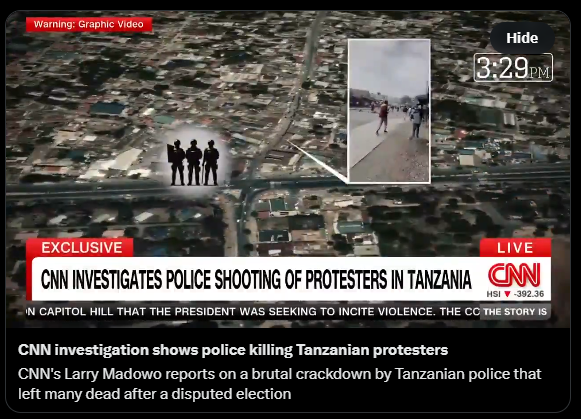
WATCH THE VIDEO HERE
Madowo’s team documented multiple instances where police used lethal force against largely peaceful protesters, many of them young Tanzanians demanding political and economic reforms. The investigation identified signs of mass burial sites that investigators believe were used to dispose of bodies and obscure the scale of casualties.
The network employed advanced verification techniques throughout the months-long inquiry. Forensic analysts examined video footage frame-by-frame to establish timelines and identify victims. Geospatial experts studied satellite imagery to track changes in suspected burial locations. Witness testimony was cross-referenced and corroborated across dozens of interviews with protesters, relatives of the missing, medical workers, and community members.
CNN presented the Tanzanian government with a comprehensive list of questions detailing the allegations and requesting comment on the documented evidence. The government did not respond to multiple requests, leaving the serious accusations unaddressed.
The protests that sparked the crackdown were part of a wider movement of youth activism sweeping East Africa. Gen-Z demonstrators in Tanzania took to the streets demanding transparency, job creation, and an end to corruption. What began as peaceful assemblies escalated when security forces responded with what witnesses describe as disproportionate violence.
Family members of missing protesters told CNN they have been unable to locate their loved ones or obtain information from authorities about their whereabouts. Several described intimidation by security officials when they attempted to file reports or seek answers.
The investigation reveals coordination among security agencies in the response to protests and suggests that the violence was not isolated to individual officers acting independently. Video evidence analyzed by CNN shows uniformed police in multiple locations using similar tactics against demonstrators.
International law experts reviewing CNN’s findings indicated that if confirmed, the actions described could constitute serious human rights violations, potentially rising to the level of crimes under international law. The use of mass graves to conceal killings would represent an additional layer of criminality, they noted.
Human Rights Watch and Amnesty International have previously documented restrictions on freedoms in Tanzania, including limitations on assembly and expression. The CNN investigation provides the most detailed documentation yet of violent suppression of dissent under the current government.
Regional implications of the findings extend beyond Tanzania’s borders. Youth-led protests have erupted across East Africa in recent years, with governments taking varying approaches to managing dissent. The documented violence in Tanzania may influence how other nations in the region respond to similar movements.
The African Union has not issued a statement on the CNN investigation. The United Nations Office of the High Commissioner for Human Rights declined to comment specifically but reiterated its position that all allegations of extrajudicial killings warrant thorough, independent investigation.
Opposition politicians in Tanzania, many of whom operate under severe constraints, have called for international intervention and accountability. Some have faced arrest or harassment for speaking about the protests.
CNN stated it would make portions of its investigation, including verified video evidence, available to international bodies and human rights organizations. The network emphasized that it used rigorous verification standards throughout the investigation and stands fully behind its reporting.
Legal analysts suggest the evidence compiled by CNN could form the basis for future accountability mechanisms, whether domestic prosecutions, regional court proceedings, or international investigations. However, they note that political will remains the primary obstacle to justice in such cases.
The Tanzanian government’s refusal to engage with CNN’s questions leaves families without answers and the international community without official explanation for the documented events. Pressure is mounting for independent investigations with international oversight.
As the story develops, attention turns to whether regional bodies, international organizations, or partner nations will take action in response to the documented allegations of state violence and potential crimes against humanity.
Follow us on X





VIDEO: Every Goal Scored in the Premier League This Weekend — Matchweek 30

EPRA Sets Fuel Prices for March-April 2026 — Here Is What You Will Pay

Israeli Government Announces Fully Funded Postgraduate Scholarships for Kenyans

Russian TikToker’s Videos Include Encounter with Older Woman, Raising Further Consent Concerns

East Africa’s Richest Musicians 2025: The Wealth Rankings Revealed

Why Gachagua Was Absent at Raila’s Farewell, According to His Camp
-

 Gossip6 days ago
VIDEOS: What Happened In Naivasha During The Weekend Has Boyfriends Crying
-

 Gossip1 week ago
VIDEO: Kenyan Female Chemist Attendant Goes Viral After Video Shows Her Helping Male Customer Put On Protection — Public Reacts
-

 Gossip1 week ago
Morara Kebaso’s Secret Mombasa Getaway With Slay Queen Laid Bare in Shocking Audio Leak
-
 Gossip1 week ago
Watch Video: Vihiga Man Takes Selfie Of Wife and Pastor During Mechi
-

 Gossip1 week ago
The Cheeky Couple Video That Broke Social Media This Week
-

 Mombasa1 week ago
VIDEO: Mackenzie’s Lawyer Challenges Police to Prove Shakahola Victims Are Not in Heaven
-

 Education1 week ago
How to Apply for Kenya Utalii College Through KUCCPS — Diploma and Certificate Applications Now Open
-
 Education5 days ago
Israeli Government Announces Fully Funded Postgraduate Scholarships for Kenyans