
News
Guinea-Bissau Army Chief Sworn In Amid Ongoing Protests and Riots Over Disputed Election Results
General Horta Nta Na Man, the former army chief of staff, has been sworn in as Guinea-Bissau’s transitional president following a military takeover that opposition leaders claim was orchestrated to cover up electoral defeat.
ALSO READ: Trump Administration Orders Review of 200,000 Refugees, Affecting Thousands from Kenyan Camps
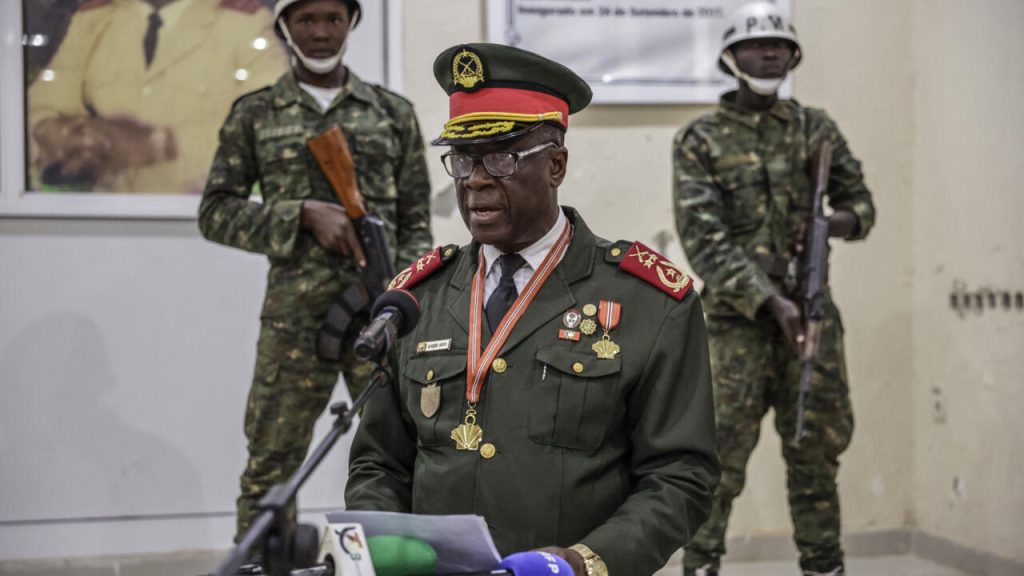
The swearing-in ceremony took place at the presidential palace in the capital, Bissau, with military commanders and government officials in attendance. General Nta Na Man, who served as a close ally of deposed President Umaro Sissoco Embaló, will oversee a one-year transition period before new elections are scheduled.
The military intervention comes amid explosive allegations from opposition parties, who accuse President Embaló of staging a coup to mask his loss in the presidential election. Opposition leaders claim Embaló orchestrated the takeover to avoid acknowledging electoral defeat and to maintain control through his military ally.
“This is not a transition, it is a theft,” said one opposition spokesman. “Embaló lost the election and has now used his military connections to install a puppet regime rather than accept the will of the people.”
The accusations have intensified an already volatile political situation in the West African nation, where the line between civilian and military authority has historically been blurred. Critics point to General Nta Na Man’s close ties to the former president as evidence that this represents continuity rather than genuine change.
As army chief of staff under Embaló’s administration, General Nta Na Man was part of the inner circle of military leadership that has dominated Guinea-Bissau’s security apparatus. His appointment as transitional leader raises questions about whether the one-year transition will lead to genuine democratic reforms or merely consolidate military control.
The new junta leader addressed the nation following his swearing-in, pledging to maintain stability and organize credible elections within the stipulated timeframe. However, his close association with the deposed president has fueled skepticism among opposition supporters and civil society groups.
Guinea-Bissau has experienced repeated coups and attempted coups since gaining independence from Portugal in 1974. No elected president has successfully completed a full five-year term without being overthrown or facing serious threats to their rule, making the country one of West Africa’s most politically unstable nations.
International observers, including representatives from the Economic Community of West African States and the African Union, have expressed concern about the latest developments. ECOWAS has called for clarification on the circumstances surrounding President Embaló’s removal and the installation of military leadership.
The European Union, which has provided significant development assistance to Guinea-Bissau, issued a statement urging respect for constitutional order and calling for a swift return to civilian democratic governance. The United Nations Secretary-General’s office also released a statement expressing concern about political stability in the country.
The disputed electoral process that preceded the coup remains murky, with conflicting claims about vote tallies and allegations of irregularities. Opposition parties have demanded an independent audit of election results, while supporters of the former president maintain that Embaló won legitimately.
Guinea-Bissau, with a population of approximately two million people, has struggled with poverty, corruption, and weak institutions since independence. The country has also gained notoriety as a transit point for Latin American drug traffickers smuggling cocaine to Europe, with analysts suggesting narcotics money has corrupted elements of the military and political elite.
The one-year transition timeline announced by General Nta Na Man will be closely scrutinized by both domestic and international stakeholders. Opposition leaders have already demanded guarantees that the transitional government will be inclusive and that electoral processes will be transparent and independently monitored.
As Guinea-Bissau navigates yet another period of political uncertainty, ordinary citizens face continued economic hardship. Many depend on subsistence agriculture and remittances from family members working abroad, with hopes that political stability might finally create conditions for development and improved living standards.
The coming months will test whether this transition represents a path toward democratic consolidation or another cycle in Guinea-Bissau’s troubled political history. Regional powers and international partners have signaled they will withhold full recognition until the circumstances surrounding the power transfer are clarified and credible commitments to democratic elections are demonstrated.
Follow us On X





VIDEO: Every Goal Scored in the Premier League This Weekend — Matchweek 30

EPRA Sets Fuel Prices for March-April 2026 — Here Is What You Will Pay

Israeli Government Announces Fully Funded Postgraduate Scholarships for Kenyans

Russian TikToker’s Videos Include Encounter with Older Woman, Raising Further Consent Concerns

East Africa’s Richest Musicians 2025: The Wealth Rankings Revealed

Why Gachagua Was Absent at Raila’s Farewell, According to His Camp
-

 Gossip5 days ago
VIDEOS: What Happened In Naivasha During The Weekend Has Boyfriends Crying
-

 Gossip1 week ago
Morara Kebaso’s Secret Mombasa Getaway With Slay Queen Laid Bare in Shocking Audio Leak
-

 Gossip1 week ago
VIDEO: Kenyan Female Chemist Attendant Goes Viral After Video Shows Her Helping Male Customer Put On Protection — Public Reacts
-

 Gossip1 week ago
Watch Video: Vihiga Man Takes Selfie Of Wife and Pastor During Mechi
-

 Gossip1 week ago
The Cheeky Couple Video That Broke Social Media This Week
-

 Mombasa1 week ago
VIDEO: Mackenzie’s Lawyer Challenges Police to Prove Shakahola Victims Are Not in Heaven
-
 Education1 week ago
How to Apply for Kenya Utalii College Through KUCCPS — Diploma and Certificate Applications Now Open
-
 Education5 days ago
Israeli Government Announces Fully Funded Postgraduate Scholarships for Kenyans