
News
Explained: Why Your Charger Cable Has That Small Lump — and What It Actually Does
If you have ever noticed a small, cylindrical lump near the end of your laptop charger or monitor cable, you are not alone — but most people have no idea what it does.
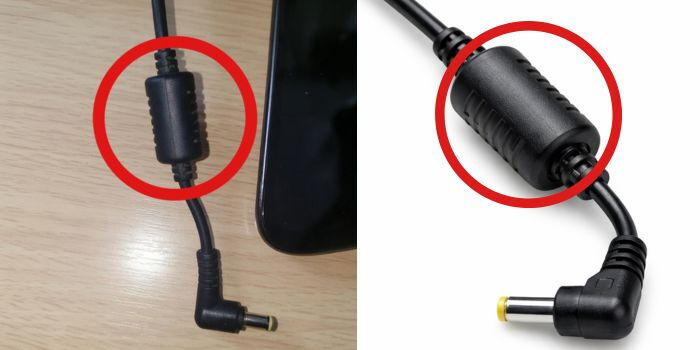
The component is called a ferrite bead, or ferrite choke, and its job is to quietly protect your electronics from themselves.
Electronic devices — laptops, televisions, routers, phone chargers — constantly emit electromagnetic signals during normal operation. Left unchecked, these signals travel along cables and radiate outward, creating electromagnetic interference (EMI) that can cause speakers to buzz, screens to flicker, or Wi-Fi connections to drop.
The ferrite bead stops this from happening. Inside its plastic casing sits a core of ferrite, a magnetic material made primarily from iron oxide combined with other metals. As unwanted high-frequency electrical noise travels along the cable, the ferrite core absorbs and disperses it — preventing the cable from functioning as an unintentional antenna broadcasting interference to nearby devices.
The technology is a staple of modern electronics engineering, and its presence on a cable typically signals that a device has been designed to meet international electromagnetic compatibility (EMC) standards. In homes and offices where dozens of electronic devices operate side by side, these small components play an outsized role in keeping everything running smoothly.
Small, inexpensive, and easy to overlook, the ferrite bead is nonetheless one of the unsung components ensuring the modern digital environment stays stable.



VIDEO: Hannah Benta Caught Up in Leaked Video Controversy Involving Baby Daddy Sammir

Explained: Why Your Charger Cable Has That Small Lump — and What It Actually Does

VIDEO: Every Goal Scored in the Premier League This Weekend — Matchweek 30

Russian TikToker’s Videos Include Encounter with Older Woman, Raising Further Consent Concerns

East Africa’s Richest Musicians 2025: The Wealth Rankings Revealed

Why Gachagua Was Absent at Raila’s Farewell, According to His Camp
-

 Gossip1 week ago
VIDEOS: What Happened In Naivasha During The Weekend Has Boyfriends Crying
-

 Gossip1 week ago
Morara Kebaso’s Secret Mombasa Getaway With Slay Queen Laid Bare in Shocking Audio Leak
-

 Gossip1 week ago
The Cheeky Couple Video That Broke Social Media This Week
-

 Mombasa1 week ago
VIDEO: Mackenzie’s Lawyer Challenges Police to Prove Shakahola Victims Are Not in Heaven
-
 News7 days ago
VIDEO: Every Goal Scored in the Premier League This Weekend — Matchweek 30
-

 Education1 week ago
Israeli Government Announces Fully Funded Postgraduate Scholarships for Kenyans
-

 Education1 week ago
How to Apply for Kenya Utalii College Through KUCCPS — Diploma and Certificate Applications Now Open
-

 Business7 days ago
EPRA Sets Fuel Prices for March-April 2026 — Here Is What You Will Pay