Education
Education CS Ogamba Warns Principals Against Illegal Admission Fees, Urges Parents to Report Bribery
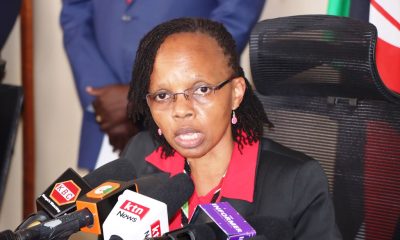
Education Cabinet Secretary Julius Ogamba has issued a stern warning to school administrators demanding unauthorized payments during student admissions, cautioning that such practices constitute illegal conduct subject to immediate legal and administrative consequences.

Speaking during a Tuesday morning interview on Capital FM, the Cabinet Secretary emphasized that the government’s digitalization of school admissions through the Kenya Education Management Information System was specifically designed to eliminate corruption opportunities that have plagued the enrollment process.
Digital System Aims to Remove Corruption Loopholes
“We are using KEMIS to admit students to schools so that we can remove some admission requirements from teachers,” Ogamba explained during the January 20 broadcast. “Some school principals demand bribes so that you get a spot in a school.”
The Education CS revealed that corruption during admissions has become a persistent challenge, with certain school administrators exploiting desperate parents seeking placement for their children by demanding unauthorized payments in exchange for enrollment opportunities.
To combat this practice, Ogamba issued a direct appeal to parents and guardians experiencing such demands, urging them to immediately report any principal or school official who solicits bribes or imposes extra levies during the admission process.
Clear Reporting Mechanism Established
The Cabinet Secretary outlined specific reporting channels designed to ensure swift action against corrupt officials. Parents encountering demands for irregular payments should file complaints at the nearest police station or education offices at sub-county or county level.
“It is something we have sung and told parents that if a principal asks you for that kind of money, let us know,” Ogamba directed. “Report it to the next police station or our education officers so that action can be taken.”
By establishing these clear reporting pathways, the ministry aims to create accountability mechanisms that discourage corrupt practices while protecting parents from exploitation during an already stressful admission period.
Government Meets Funding Obligations
While characterizing additional admission levies as both illegal and irregular, Cabinet Secretary Ogamba stressed that the national government already fulfills its financial obligations to educational institutions. Parents should therefore not face unnecessary financial pressure from learning institutions seeking unauthorized supplementary payments.
“The government is paying its portion of the money, so extra levies are not supposed to be charged on parents,” the CS stated. “It is something I have gazetted, and the principals are aware that it is an illegal and irregular levy.”
The Cabinet Secretary’s remarks referenced official gazette notices that have formally communicated the prohibition against unauthorized fees to school administrators nationwide. Despite this clear directive, enforcement challenges persist as some principals continue demanding irregular payments.
Limited Exceptions Require Parental Consent and Ministerial Approval
Ogamba clarified that schools may collect additional funds only under strictly defined conditions requiring both parental agreement and government authorization. This dual-approval mechanism ensures transparency and protects families from arbitrary financial demands.
According to the Cabinet Secretary, school administrators seeking to impose supplementary charges must first secure consent from parents during an Annual General Meeting where the proposed levy can be discussed, debated, and voted upon by the parent community.
“Principals should only charge with the consent of the parents when they call for an annual general meeting, and they agree that each parent is to pay an extra fee,” Ogamba explained.
However, parental consent alone does not authorize fee collection. Schools must subsequently apply for and obtain formal approval from the Ministry of Education before implementing any charges, creating an additional oversight layer designed to prevent exploitation.
“Then they ask for permission from the government,” the CS added, emphasizing the mandatory nature of ministerial authorization.
This two-stage approval process—requiring both grassroots parental consensus and central government clearance—aims to balance legitimate school funding needs against protection from predatory financial practices.
Capitation Levels Remain Unchanged
During the Capital FM interview, Cabinet Secretary Ogamba also addressed circulating claims suggesting that government capitation for basic education had been reduced, categorically dismissing such reports as inaccurate.
The CS outlined current per-student funding allocations across different educational levels, confirming that capitation rates remain unchanged from previously established amounts.
According to Ogamba, secondary schools receive Ksh22,244 per student annually, junior secondary schools receive Ksh15,000 per learner, and primary schools receive Ksh1,400 per pupil. These allocations represent the government’s contribution toward operational costs, instructional materials, and infrastructure maintenance at public learning institutions.
By clarifying these figures, the Cabinet Secretary sought to counter misinformation while reinforcing the message that adequate government funding should eliminate the need for irregular additional charges during admissions.
Broader Context of Education Funding Debates
The Cabinet Secretary’s remarks come amid ongoing national discussions about education financing adequacy and the tension between government capitation levels and actual school operational costs. While government officials maintain that allocated funds suffice for basic operations, some school administrators and parent associations argue that inflation and expanding educational requirements create funding gaps.
This tension has historically driven some schools to impose supplementary levies—sometimes with proper authorization, but frequently without following required approval procedures. The digitalization of admissions represents one strategy for reducing opportunities for unauthorized fee collection during the enrollment process.
The Kenya Education Management Information System centrally manages student placement, theoretically removing discretion that individual principals might exploit for corrupt gain. By standardizing and digitalizing admissions, the government aims to create transparent processes less susceptible to manipulation.
Implementation Challenges Persist
Despite clear policy directives and technological interventions, enforcement of regulations prohibiting irregular fees remains challenging. Many parents, desperate to secure school placement for their children, feel pressured to comply with unauthorized demands rather than risk losing enrollment opportunities through complaints that might antagonize school administrators.
This power imbalance—where school officials control access to education while parents lack alternative options—creates conditions conducive to exploitation. The Cabinet Secretary’s public appeal for reporting represents an attempt to shift this dynamic by empowering parents with clear channels for redress and assurances of protective action.
However, effective enforcement will require consistent follow-through on reported cases, visible consequences for administrators found guilty of corruption, and protections ensuring that complainants do not face retaliation that might compromise their children’s educational experiences.
Looking Forward
As the 2025 school year progresses and admissions continue across primary, junior secondary, and senior secondary levels, the Ministry of Education’s ability to enforce its anti-corruption directives will face practical testing. Parents’ willingness to report irregular demands—and the government’s responsiveness to such reports—will determine whether digitalization and policy pronouncements translate into meaningful protection against exploitation.
Cabinet Secretary Ogamba’s clear warning to principals, combined with specific reporting mechanisms and the threat of legal consequences, represents the government’s latest attempt to address longstanding corruption challenges in education administration. Whether these measures prove sufficient to eliminate irregular admission fees remains to be seen as the academic year unfolds.
For now, the message to parents remains clear: government capitation covers required costs, additional admission fees are illegal without proper authorization, and any demands for unauthorized payments should be immediately reported to law enforcement or education officials for swift intervention.





VIDEO: Hannah Benta Caught Up in Leaked Video Controversy Involving Baby Daddy Sammir

Explained: Why Your Charger Cable Has That Small Lump — and What It Actually Does

VIDEO: Every Goal Scored in the Premier League This Weekend — Matchweek 30

Russian TikToker’s Videos Include Encounter with Older Woman, Raising Further Consent Concerns

East Africa’s Richest Musicians 2025: The Wealth Rankings Revealed

Why Gachagua Was Absent at Raila’s Farewell, According to His Camp
-

 Gossip1 week ago
VIDEOS: What Happened In Naivasha During The Weekend Has Boyfriends Crying
-
 Gossip23 hours ago
VIDEO: Hannah Benta Caught Up in Leaked Video Controversy Involving Baby Daddy Sammir
-

 Gossip1 week ago
The Cheeky Couple Video That Broke Social Media This Week
-

 Education1 week ago
Israeli Government Announces Fully Funded Postgraduate Scholarships for Kenyans
-
 News1 day ago
Explained: Why Your Charger Cable Has That Small Lump — and What It Actually Does
-
 News1 week ago
VIDEO: Every Goal Scored in the Premier League This Weekend — Matchweek 30
-

 Business1 week ago
EPRA Sets Fuel Prices for March-April 2026 — Here Is What You Will Pay