
Jobs
Desperation in Broad Daylight: Nyamakima Video Exposes the Human Cost of Kenya’s Economic Crisis
A video filmed in Nairobi’s Nyamakima area has gone viral online, showing a group of women openly soliciting clients along one of the city’s busiest commercial streets in the middle of the day. The footage has sparked widespread reaction — and a deeper, more uncomfortable conversation about what is driving some of Kenya’s most vulnerable women to this point.
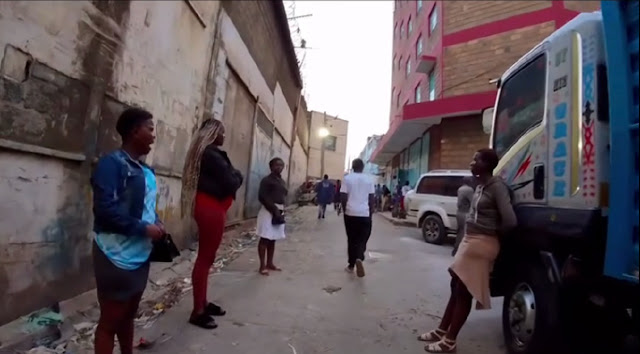
Nyamakima, located in Nairobi’s central business district, is one of the city’s most recognisable commercial hubs, known primarily for its electronics dealers, hardware traders, and the constant movement of goods and people. The scenes captured in the video — women approaching passersby as traders go about their business in the background — have struck many viewers as a stark and troubling contrast to the area’s familiar hustle.
Ksh150: A Number That Says Everything
What has disturbed many Kenyans as much as the footage itself are the reported figures attached to it. According to accounts circulating alongside the video online, some of the women in the clip are charging as little as Ksh150 — an amount that barely covers a basic meal in Nairobi — for their services.
That figure, whether entirely accurate or not, has become the number that Kenyans are talking about. To many, it is not just a price. It is a measure of desperation. It is a signal of just how badly the economic conditions in Kenya have deteriorated for the most marginalised segments of the population.
The Economic Context Cannot Be Ignored
It would be easy — and wrong — to reduce this story to a simple tale of moral failure or urban decay. The broader context demands a more honest reckoning.
Kenya is currently in the grip of a severe cost of living crisis. The prices of basic food items, rent, transport, and utilities have risen sharply over the past two years, squeezing household incomes across the country. Unemployment, particularly among young women without formal education or marketable skills, remains a serious and largely unaddressed challenge.
For women with no safety net — no formal employment, no family support, no access to credit or social welfare — the calculation can become brutally simple. Survival takes precedence over everything else.
Economists and social welfare experts have long warned that economic hardship of this scale does not only create poverty. It creates vulnerability — and that vulnerability, without adequate state intervention, can manifest in exactly the ways captured in the Nyamakima video.
A City That Looks Away
What is also striking about the footage is the ordinariness of the surrounding scene. Traders continue working. Pedestrians walk past. The city moves on. For many residents, scenes like this are not new — they are simply usually less visible, pushed to the margins of the night rather than played out under the afternoon sun.
The daylight setting has forced the conversation into the open in a way that darkness usually prevents.
Urban planning experts and social workers have for years raised concerns about Nairobi’s failure to provide adequate social support infrastructure in densely populated commercial areas. The city’s informal economy absorbs millions of residents, but it also exposes them to conditions that formal employment and state protection would otherwise shield them from.
What Needs to Happen
The Nyamakima video is uncomfortable viewing. It is meant to be. But discomfort alone achieves nothing unless it is channelled into action.
Authorities need to respond to this footage not with arrests and crackdowns — which historically do little to address root causes and often make the lives of already vulnerable women more dangerous — but with a genuine assessment of what economic and social support systems are missing and how they can be urgently provided.
Women’s rights advocates have long called for expanded vocational training programmes, accessible microfinance for women in informal settlements, and a strengthened social safety net for those living below the poverty line. The Nyamakima video makes the case for all of those interventions more powerfully than any policy document ever could.
Kenya’s economic crisis has many faces. This is one of them. And it deserves to be seen clearly — with compassion, not contempt.













Kenyans Can Now Access Specialised Treatment in India, Turkey and Saudi Arabia Under SHA Cover

Desperation in Broad Daylight: Nyamakima Video Exposes the Human Cost of Kenya’s Economic Crisis

Heavy Rain and Thunderstorms to Lash Nairobi and Western Kenya This Weekend

Russian TikToker’s Videos Include Encounter with Older Woman, Raising Further Consent Concerns

East Africa’s Richest Musicians 2025: The Wealth Rankings Revealed

Why Gachagua Was Absent at Raila’s Farewell, According to His Camp
-

 Education3 days ago
IEBC Jobs 2026: How to Apply for 12,520 Temporary Voter Registration Positions
-

 News24 hours ago
The 10 Richest Female Musicians in East Africa and the Empires They’ve Built
-

 Gossip1 week ago
Russian Man’ Unmasked: Govt Officially Names Vladislav Luilkov in Non-Consensual Recording Scandal
-

 Kakamega7 days ago
Fatal Consequences: Man Loses Life After Singing Tutam at Sifuna’s Kakamega Rally
-

 Gossip3 days ago
The 10 Tribes With the Most Beautiful Women in Kenya in 2026, According to Public Opinion
-
 News23 hours ago
Heavy Rain and Thunderstorms to Lash Nairobi and Western Kenya This Weekend
-

 Education3 days ago
KUCCPS TVET Courses 2025: Subject Requirements for Diploma, Certificate and Artisan Programmes
-

 Education2 days ago
KMTC Scholarship Alert: Nine Specialised Courses Now Open for Applications — Here Is How to Qualify