
Mombasa
Coast Regional Police Commander Ali Nuno issues Shoot to Kill Order on “Panga Boys”Suspects!
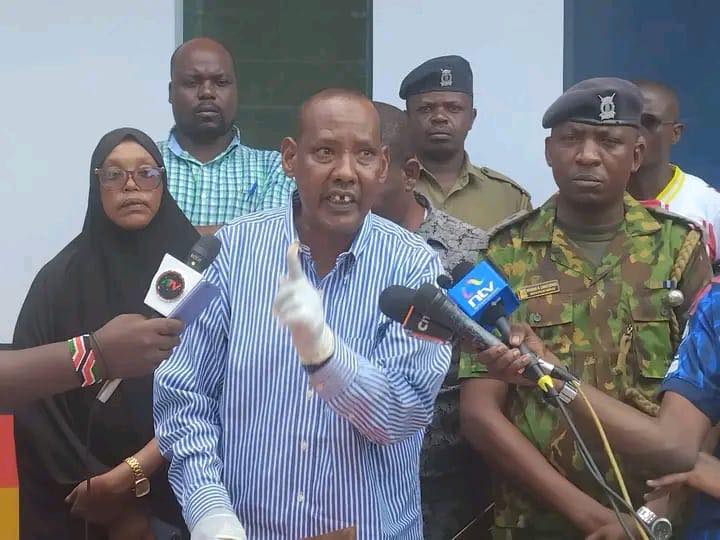
Regional Police Commander Ali Nuno vows decisive action against machete-wielding criminal gangs as security operations intensify across Mombasa, Kwale, and Kilifi counties
MOMBASA, Kenya – Coast Regional Police Commander Ali Nuno has issued stern warnings to criminal gangs terrorizing residents across Kenya’s coastal region, vowing to use all lawful means to combat the escalating violence attributed to the machete-wielding “Panga Boys” gangs.
The tough stance comes following a brutal attack in Mtwapa on February 5, 2026, where a shopkeeper was assaulted and robbed by more than five armed assailants at approximately 2:30 a.m., highlighting the continuing security crisis in the region.
Aggressive Police Response Raises Questions
While Commander Nuno has promised decisive action against the gangs, questions have emerged about the legal parameters of police operations and the use of force against criminal suspects, many of whom are minors.
Speaking during security barazas in Likoni and Diani, Nuno delivered a blunt message to criminal elements operating in the region. “Every day somebody is bleeding,” the commander stated. “We will not accept that. Work must be done, and the youth we will arrest.”
The police chief, who assumed his position in October 2025 after a successful tenure dismantling hardcore gangs in Nairobi’s Kayole area, has directed authorities to arrest not only gang members but also parents whose underage children are involved in criminal activities.
Legal Framework vs. Street Reality
Kenya’s legal framework governing police use of force is clear: Section 1 Part A of the Sixth Schedule of the National Police Service Act 2011 stipulates that officers must attempt non-violent means first, and lethal force may only be employed when non-violent approaches prove ineffective.
The law further requires that force used must be proportional to the objective, the seriousness of the offense, and the resistance encountered—all while upholding constitutional protections including the right to life under Article 26(2).
However, the reality on the ground tells a more complex story. In January 2026, a 14-year-old Grade 9 student alleged to be a gang member was shot to death during a police operation in Likoni’s Utange area. Dennis Ringa was reportedly shot from behind, prompting an investigation by the Independent Police Oversight Authority.
Within the same month, a 24-year-old suspect was shot in the foot in Mombasa’s Kadongo area during pursuit operations.
Historical Context of “Shoot-to-Kill” Controversies
The phrase “shoot-to-kill” carries significant weight in Kenya’s security discourse. In 2019, when similar gang violence plagued the coastal region, Coast Regional Police Commander Marcus Ochola explicitly denied issuing such an order.
“No shoot-to-kill order has been issued to the police,” Ochola clarified at the time. “We have deployed vehicles, security officers and intensified intelligence gathering to deal with the criminal gangs.”
More recently, Interior Cabinet Secretary Kipchumba Murkomen faced widespread condemnation in June 2025 after directing police to “shoot to kill” protesters approaching police stations during anti-government demonstrations. The Law Society of Kenya termed the directive “ultra vires, illegal and unconstitutional,” warning it could enable extrajudicial killings.
Inspector General of Police Douglas Kanja subsequently clarified that police bear individual responsibility for firearm use and are required to obey only lawful commands.
Scope of the Panga Boys Phenomenon
The Panga Boys gangs have established operations across multiple coastal counties, with particularly active cells in Mombasa’s Kisauni, Likoni, and Nyali sub-counties, Kwale’s Diani area, and parts of Kilifi County.
Research published in the Journal of Forensic Science & Criminal Investigation indicates these gangs primarily conduct armed robberies at business premises and mug pedestrians, with many members being minors—some as young as 13 years old.
The Directorate of Criminal Investigations has intensified operations, resulting in numerous arrests. In Kisauni Sub-County, officers from Mjambere police station apprehended 14 suspected gang members in late January, recovering weapons and stolen property. In Kwale County, four suspects were arrested following a violent robbery that left a victim with deep machete wounds.
Following the Mtwapa shop attack, six suspects were arrested after being tracked using CCTV footage. Police recovered six mobile phones, eight national identity cards, two Somali swords, two pangas, 18 large rolls of bhang, a weighing scale, and KSh 7,000 in cash.
Human Rights Concerns Mount
Human rights organizations have expressed alarm at the pattern of police shootings, particularly involving juveniles. The Kenya National Commission on Human Rights and the Independent Police Oversight Authority have documented numerous cases requiring investigation.
The Kenya Human Rights Commission has previously warned that “shoot-to-kill” orders undermine the constitutional presumption of innocence and risk the deaths of innocent people. “Any shoot to kill order would undermine this presumption and most critically may result in the killings of innocent persons as has been evidenced and documented variously in reports and court judgments,” the organization stated in a 2023 position paper.
Human Rights Watch has documented extrajudicial killings in Kenya’s low-income areas over multiple years, pointing to what researchers describe as systemic issues within law enforcement agencies.
Community Engagement Offers Hope
In a potentially positive development, 100 reformed youth from Likoni’s Timbwani area voluntarily surrendered to police during a public baraza, renouncing criminal activities.
Commander Nuno welcomed these individuals, promising collaboration toward rehabilitation and legitimate employment, particularly in the Blue Economy and Digital Economy sectors. “Opportunities are there, my sons and daughters. My office has an open-door policy; you can come anytime,” Nuno told the reformed youth.
Mombasa County Commissioner Mohamed Noor encouraged former gang members to enroll in Technical and Vocational Education and Training institutions to acquire skills for more than 30,000 employment opportunities expected from the Dongo Kundu Special Economic Zone.
Nominated Senator Miraj Abdillahi has proposed a special program similar to Nairobi’s River Regeneration initiative to engage Likoni youth in beach maintenance rather than leaving them idle.
Multi-Faceted Challenge Requires Comprehensive Response
According to a Ministry of Interior report titled “Jukwaa la Usalama,” addressing the Panga Boys phenomenon requires approaches combining law enforcement with community sensitization, rehabilitation programs, and vocational training.
Kwale Governor Fatuma Achani has challenged the notion that joblessness alone drives gang membership. “Most of the criminals are teenagers of school-going age who cannot be legally employed,” she stated. “Someone aged between 13 to 16 years old cannot be employed, that would be child labour.”
Mombasa Governor Abdulswamad Nassir revealed that when young gang members are arrested, their families quickly emerge to plead for their release, suggesting these are not abandoned street children but youth from established households.
Balancing Security and Rights
The National Police Service has called on residents to cooperate with security agencies by reporting suspicious activities through local police stations or toll-free numbers 999, 911, and 112, or anonymously via the #FichuaKwaDCI platform.
“The National Police Service is resolute in confronting crime of any nature lawfully,” stated NPS Spokesperson Michael Nyaga. “We thank the public for providing crucial leads, demonstrating the power of community partnership in policing.”
As security operations continue, authorities face the delicate challenge of protecting public safety while respecting constitutional rights—particularly those of minors caught in the cycle of gang violence. The question remains whether aggressive enforcement alone can break this cycle, or whether sustainable solutions require addressing the underlying socioeconomic factors driving youth into criminal gangs.
The coming weeks will test whether Commander Nuno’s tough approach can reduce violence while maintaining respect for the rule of law and human rights protections that distinguish lawful policing from extrajudicial action.
For reporting suspicious activities or providing information on gang-related crimes, contact the National Police Service through toll-free numbers 999, 911, 112, or #FichuaKwaDCI. If you have witnessed police misconduct, contact the Independent Police Oversight Authority or human rights organizations operating in the coastal region.






“We Almost Lost Tuju” — Kalonzo Breaks Silence on Overnight Ordeal at Karen Police Station

VIDEO: Hannah Benta Caught Up in Leaked Video Controversy Involving Baby Daddy Sammir

Explained: Why Your Charger Cable Has That Small Lump — and What It Actually Does

Russian TikToker’s Videos Include Encounter with Older Woman, Raising Further Consent Concerns

East Africa’s Richest Musicians 2025: The Wealth Rankings Revealed
VIDEO: Hannah Benta Caught Up in Leaked Video Controversy Involving Baby Daddy Sammir
-
 Gossip2 days ago
VIDEO: Hannah Benta Caught Up in Leaked Video Controversy Involving Baby Daddy Sammir
-

 Gossip1 week ago
VIDEOS: What Happened In Naivasha During The Weekend Has Boyfriends Crying
-
 News2 days ago
Explained: Why Your Charger Cable Has That Small Lump — and What It Actually Does
-

 Education1 week ago
Israeli Government Announces Fully Funded Postgraduate Scholarships for Kenyans
-

 News1 week ago
VIDEO: Every Goal Scored in the Premier League This Weekend — Matchweek 30
-

 Business1 week ago
EPRA Sets Fuel Prices for March-April 2026 — Here Is What You Will Pay
-
 News12 hours ago
“We Almost Lost Tuju” — Kalonzo Breaks Silence on Overnight Ordeal at Karen Police Station