
News
“No New Deal Without Fulfilling Promises”: Winnie Odinga Sets Conditions as Ruto Pursues ODM Alliance
East African Legislative Assembly MP Winnie Odinga Highlights 38-Day Countdown to Agreement Expiry, Raising Questions About Future Political Alignment
The political cooperation framework established between the Orange Democratic Movement and the United Democratic Alliance faces a critical expiration deadline in early March, with questions mounting over whether the government has fulfilled commitments outlined in the ten-point agenda signed nearly one year ago.
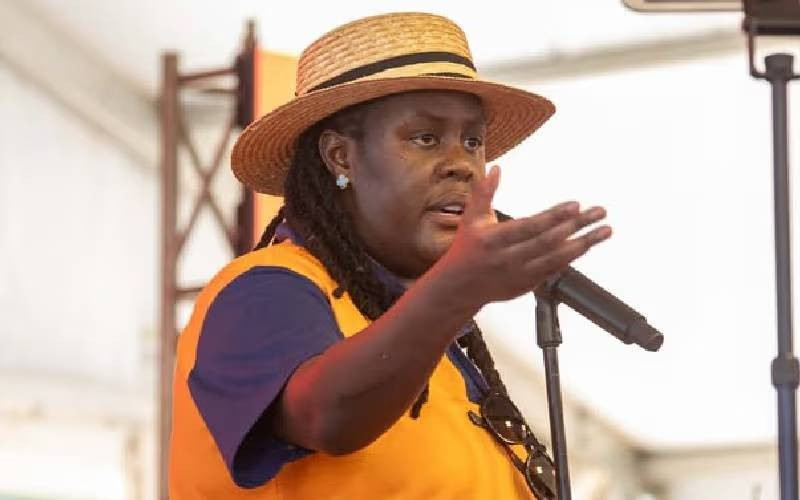
East African Legislative Assembly Member of Parliament Winnie Odinga has drawn attention to the approaching conclusion of the agreement period, noting that the memorandum of understanding finalized at the Kenyatta International Convention Centre on March 7, 2025, incorporated a specific one-year timeframe requiring comprehensive review before any discussions of extended political arrangements.
During a television interview on Citizen TV Tuesday evening, the EALA representative emphasized that the agreement’s March 7, 2026 expiration date was intentionally established to enable assessment of implementation progress on social justice reforms, anti-corruption measures, and other priority areas before determining the opposition party’s political trajectory toward the 2027 general elections.
Agreement Background and Original Framework
The cooperation framework emerged from months of political negotiation aimed at addressing Kenya’s governance challenges through a broad-based approach incorporating opposition perspectives within government policy formulation and implementation structures.
The ten-point agenda outlined commitments spanning economic reform, constitutional implementation, devolution protection, social justice advancement, and anti-corruption enforcement. Both parties established technical implementation teams responsible for translating the agreement’s principles into concrete policy actions and institutional reforms.
Central to the arrangement was the principle that each party would maintain its distinct political identity while collaborating on shared national priorities. The agreement explicitly prohibited political interference in respective party strongholds, with the understanding that such cooperation served national stability rather than permanent political merger.
Four members of the Orange Democratic Movement subsequently accepted Cabinet Secretary appointments in President William Ruto’s administration, including Hassan Joho at Mining and Blue Economy, John Mbadi at National Treasury, Wycliffe Oparanya at Cooperatives, and Opiyo Wandayi at Energy and Petroleum.
Implementation Progress and Accountability Concerns
Questions surrounding the extent to which the government has honored agreement commitments have intensified as the expiration date approaches, with some ODM officials expressing concern that insufficient progress on key reform areas undermines the arrangement’s legitimacy.
The EALA legislator indicated that preliminary assessments suggest incomplete implementation of several agenda items, particularly regarding anti-corruption enforcement and social justice reforms that formed the agreement’s ethical foundation.
A progress review meeting convened at State House recently brought together implementation oversight teams to brief President Ruto on advancement across the ten priority areas. The teams reportedly committed to presenting a comprehensive preliminary progress report by February 6, approximately one month before the agreement’s formal conclusion.
The February 6 reporting deadline carries significant implications for ODM’s strategic deliberations, as the assessment will inform internal party discussions about whether continued cooperation merits extension or whether the opposition should reassert its traditional adversarial role heading into the 2027 electoral cycle.
Political Legitimacy and Succession Questions
Winnie Odinga’s intervention comes amid broader debates within ODM regarding political legitimacy and decision-making authority following the October 2025 death of long-serving party leader Raila Odinga, who personally negotiated and signed the cooperation agreement with President Ruto.
The former prime minister’s passing created organizational uncertainty within ODM, with questions emerging about which party structures or individuals possess legitimate authority to make binding decisions regarding political alignment, coalition arrangements, and electoral strategy.
Several Cabinet Secretaries appointed from ODM ranks have publicly indicated intentions to maintain their government positions and support the broad-based arrangement regardless of the March expiration, citing personal commitments made to Raila Odinga before his death.
However, critics within the party, including Secretary-General Edwin Sifuna and Siaya Governor James Orengo, have insisted that such pronouncements exceed individual authority and that any decisions extending political cooperation beyond March 2026 must receive explicit endorsement through party democratic structures.
The EALA member emphasized during her interview that the agreement was negotiated as a structured understanding focused on specific policy outcomes rather than a traditional political coalition trading policy influence for power-sharing arrangements.
“The date was deliberately established to provide an accountability mechanism,” she noted, explaining that review processes would examine whether commitments on social justice, anti-corruption efforts, and other priorities had materialized before considering any extension discussions.
Conditions for Future Political Engagement
Internal ODM discussions regarding potential pre-coalition arrangements for the 2027 elections have reportedly established several preconditions that would need satisfaction before formal alliance negotiations could proceed.
Party sources indicate that any serious engagement would require demonstrable completion of the ten-point agenda items, equitable power-sharing frameworks that recognize ODM’s political weight, meaningful inclusion in senior government appointments, and potentially consideration of deputy presidential candidacy arrangements.
The demand for accountability on existing commitments before entertaining new political deals reflects broader skepticism within segments of the party membership about whether cooperation has yielded tangible benefits commensurate with the political risks of alignment with the ruling coalition.
Chairperson Gladys Wanga has publicly accused UDA operatives of violating the agreement’s non-interference provisions through political activities in ODM’s traditional Nyanza region strongholds, suggesting that the ruling party has not honored its side of the cooperation framework’s fundamental terms.
Such allegations, if substantiated through the implementation review process, would strengthen arguments from those within ODM who advocate for terminating the arrangement and reverting to opposition politics heading into the next electoral cycle.
Internal Party Tensions and Competing Visions
The approaching expiration deadline has intensified existing tensions within ODM between factions favoring continued government cooperation and those advocating for restoration of the party’s traditional opposition role.
Acting party leader Oburu Oginga, elder brother of the late Raila Odinga, has suggested openness to extending cooperation and has indicated that political alignments would be finalized by June 2026, several months beyond the March expiration date.
This timeline revision has drawn criticism from party officials who argue that any extension of the existing arrangement or negotiation of new political deals requires explicit membership authorization through a National Delegates Convention rather than unilateral pronouncements by party leadership.
The EALA legislator has been among the most prominent voices calling for democratic consultation processes, arguing that the cooperation arrangement was personally managed by Raila Odinga and that his absence necessitates fresh mandates from party members before major strategic decisions.
“The relationship is complicated,” she stated during the ODM twentieth anniversary celebrations in Mombasa, questioning whether current party managers possess the capability to navigate the political complexities that Raila Odinga personally stewarded.
Her call for a National Delegates Convention to determine leadership and strategic direction reflects concerns that top-down decision-making without grassroots consultation risks alienating the party’s membership base and undermining democratic governance principles that ODM has historically championed.
Implementation Review Process and Timeline
The technical teams established to oversee the ten-point agenda’s implementation have reportedly conducted periodic assessments throughout the agreement period, though comprehensive public reporting on progress has been limited.
The upcoming February 6 preliminary report presentation to President Ruto represents a critical accountability moment, potentially revealing the extent to which policy commitments have translated into concrete reforms across government institutions and programmes.
Key areas expected to receive scrutiny include:
Anti-Corruption Enforcement: Assessment of whether promised intensification of graft investigations, prosecutions, and asset recovery has materialized, with particular attention to high-profile cases that have languished in the justice system.
Economic Reform Implementation: Evaluation of progress on agreed economic policy measures aimed at addressing cost of living pressures, tax reform, and equitable distribution of development resources across Kenya’s regions.
Devolution Protection: Analysis of whether the national government has honored commitments to protect devolution principles, ensure timely disbursement of county allocations, and resist centralization tendencies that undermine constitutional governance structures.
Social Justice Advancement: Review of initiatives addressing inequality, expanding social safety nets, and ensuring marginalized communities receive equitable access to government services and opportunities.
Constitutional Fidelity: Assessment of government adherence to constitutional provisions, respect for separation of powers, and implementation of pending constitutional commissions and offices.
The review outcomes will significantly influence both public perceptions of the agreement’s value and internal ODM deliberations about future political strategy.
Political Calculus and 2027 Electoral Considerations
The March deadline arrives at a politically sensitive moment, approximately fifteen months before the August 2027 general elections when Kenyans will elect the president, members of parliament, governors, and county assembly representatives.
Traditional political timelines suggest that parties finalize coalition arrangements and presidential candidacy decisions during the twelve-to-eighteen month period preceding elections, making the March review a natural inflection point for ODM’s strategic positioning.
Those favoring continued cooperation argue that maintaining government influence enables the party to advance policy priorities, secure development resources for its strongholds, and position itself as a stabilizing force in Kenya’s political landscape.
Critics counter that prolonged cooperation risks eroding ODM’s distinct identity, alienating its traditional support base, and eliminating the accountability function that opposition politics provides in democratic governance systems.
The February 6 preliminary report will likely become a focal point for both perspectives, with cooperation advocates highlighting implementation successes while critics emphasize unfulfilled commitments and broken promises.
Regional Political Dynamics and Community Concerns
Questions about ODM’s political direction have generated anxiety among communities that have historically constituted the party’s electoral base, with concerns emerging about representation, resource allocation, and political marginalization.
Recent meetings between Luhya community elders and ODM officials exposed tensions regarding the community’s stake in the party’s future, reflecting broader unease about whether cooperation arrangements adequately protect regional interests.
Such community-level concerns underscore the political risks that unclear strategic direction creates for ODM, potentially opening space for rival political formations to make inroads in traditionally solid opposition strongholds.
The party’s ability to maintain cohesion and grassroots support while navigating elite-level political negotiations represents a central challenge that the approaching March deadline brings into sharp focus.
Looking Ahead: February and March Decision Points
The coming six weeks will prove decisive for Kenya’s political landscape, with the February 6 implementation report and March 7 expiration deadline serving as sequential accountability moments that could reshape political alignments heading into the 2027 electoral cycle.
Whether ODM chooses to extend cooperation, negotiate a formal pre-election coalition, or revert to opposition politics will depend substantially on assessment of the existing agreement’s implementation and membership consultation processes.
The EALA representative’s emphasis on the deliberate nature of the March expiration date signals that the agreement was designed with built-in accountability mechanisms rather than automatic renewal, placing the burden on the government to demonstrate tangible reform progress before any extension discussions.
As the countdown to March 7 continues, all eyes will turn to the February progress report and the internal ODM deliberations that will determine whether President Ruto’s broad-based government experiment continues or whether Kenya’s largest opposition party charts a different political course toward the 2027 elections.





VIDEO: Every Goal Scored in the Premier League This Weekend — Matchweek 30

EPRA Sets Fuel Prices for March-April 2026 — Here Is What You Will Pay

Israeli Government Announces Fully Funded Postgraduate Scholarships for Kenyans

Russian TikToker’s Videos Include Encounter with Older Woman, Raising Further Consent Concerns

East Africa’s Richest Musicians 2025: The Wealth Rankings Revealed

Why Gachagua Was Absent at Raila’s Farewell, According to His Camp
-

 Gossip5 days ago
VIDEOS: What Happened In Naivasha During The Weekend Has Boyfriends Crying
-

 Gossip1 week ago
VIDEO: Kenyan Female Chemist Attendant Goes Viral After Video Shows Her Helping Male Customer Put On Protection — Public Reacts
-

 Gossip1 week ago
Morara Kebaso’s Secret Mombasa Getaway With Slay Queen Laid Bare in Shocking Audio Leak
-

 Gossip1 week ago
Watch Video: Vihiga Man Takes Selfie Of Wife and Pastor During Mechi
-

 Gossip1 week ago
The Cheeky Couple Video That Broke Social Media This Week
-

 Mombasa1 week ago
VIDEO: Mackenzie’s Lawyer Challenges Police to Prove Shakahola Victims Are Not in Heaven
-
 Education1 week ago
How to Apply for Kenya Utalii College Through KUCCPS — Diploma and Certificate Applications Now Open
-
 Education5 days ago
Israeli Government Announces Fully Funded Postgraduate Scholarships for Kenyans