
Nairobi
President Ruto Addresses Mitumba Ban And Its Impact On Kenyans
President William Ruto has categorically ruled out imposing a ban on second-hand clothing imports, affirming the government’s commitment to protecting a trade that supports millions of Kenyans while maintaining a balanced approach with the local textile industry.
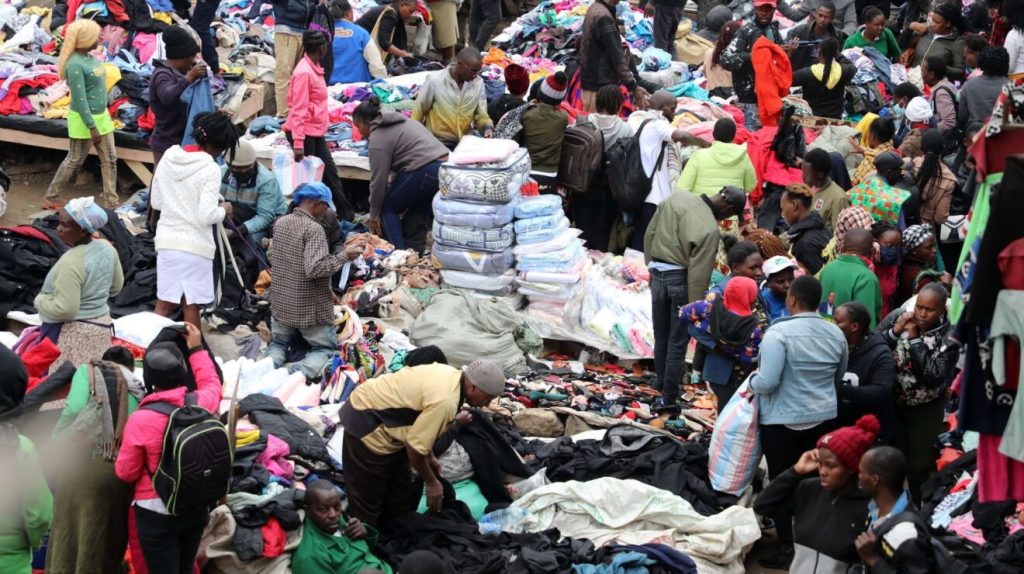
Speaking during a meeting with Nairobi Markets leadership at State House on Tuesday, President Ruto addressed mounting concerns from traders about the future of the mitumba sector, particularly in light of ongoing discussions around the African Growth and Opportunity Act (AGOA) in the U.S. Senate.
“You have made requests that you want to know the government’s stance and policy on mitumba clothing. We want you to agree with us that, despite several other countries, including those in the region, imposing a ban on mitumba, for us, we will continue to respect that balance,” the President stated.
He emphasized that unlike neighboring countries that have implemented outright bans on second-hand clothing imports, Kenya would pursue a different path that recognizes the sector’s economic importance.
“There is a large part of our population that directly depends on the mitumba clothing and industry. For that reason, we must put a balance between the market for new clothing and the mitumba market. So it is clear that the policy of Kenya is not going to change,” President Ruto declared.
Economic Significance
The second-hand clothing trade represents a substantial component of Kenya’s economy. According to recent data, the country imported over 53,000 tonnes of mitumba in the first quarter of 2025 alone, valued at approximately Ksh6.5 billion.
Industry reports reveal that approximately 24.2 million Kenyans regularly purchase or wear second-hand clothing, underscoring the sector’s penetration across all economic segments of society. Most households spend less than Ksh1,000 every three months on mitumba items, making it an affordable clothing option for low and middle-income families.
The sector provides direct employment to more than two million people, including traders, transporters, port workers, and tailors, establishing it as a vital source of income and livelihood for countless Kenyan families.
Historical Context
The President’s statement comes after years of debate about the future of second-hand clothing imports in Kenya. In 2022, then Trade Cabinet Secretary Moses Kuria suggested the government might consider banning mitumba imports once affordable local alternatives became available.
Kuria had indicated his ministry was focused on revitalizing the domestic textile sector, noting that any potential ban would only be contemplated after local manufacturers could produce competitively priced clothing for the Kenyan market. He cited South Africa as an example of countries that had taken similar measures.
Those remarks sparked considerable debate across political and economic circles. Kuria later clarified that he was not advocating for an immediate ban but rather seeking to enhance the competitiveness of locally manufactured clothing, with the goal of gradually reducing mitumba’s market dominance through natural competition.
Regional Divergence
Kenya’s decision to maintain its open policy toward second-hand clothing imports stands in contrast to several regional neighbors who have moved to restrict or ban such imports in efforts to protect and develop their domestic textile industries.
President Ruto’s announcement provides clarity and reassurance to the millions of Kenyans whose livelihoods depend on the mitumba trade, while the government continues to monitor international trade developments, including the pending AGOA legislation in the United States.





VIDEO: Every Goal Scored in the Premier League This Weekend — Matchweek 30

EPRA Sets Fuel Prices for March-April 2026 — Here Is What You Will Pay

Israeli Government Announces Fully Funded Postgraduate Scholarships for Kenyans

Russian TikToker’s Videos Include Encounter with Older Woman, Raising Further Consent Concerns

East Africa’s Richest Musicians 2025: The Wealth Rankings Revealed

Why Gachagua Was Absent at Raila’s Farewell, According to His Camp
-

 Gossip5 days ago
VIDEOS: What Happened In Naivasha During The Weekend Has Boyfriends Crying
-

 Gossip1 week ago
Morara Kebaso’s Secret Mombasa Getaway With Slay Queen Laid Bare in Shocking Audio Leak
-

 Gossip1 week ago
VIDEO: Kenyan Female Chemist Attendant Goes Viral After Video Shows Her Helping Male Customer Put On Protection — Public Reacts
-

 Gossip1 week ago
Watch Video: Vihiga Man Takes Selfie Of Wife and Pastor During Mechi
-

 Gossip1 week ago
The Cheeky Couple Video That Broke Social Media This Week
-

 Mombasa1 week ago
VIDEO: Mackenzie’s Lawyer Challenges Police to Prove Shakahola Victims Are Not in Heaven
-

 Education1 week ago
How to Apply for Kenya Utalii College Through KUCCPS — Diploma and Certificate Applications Now Open
-
 Education5 days ago
Israeli Government Announces Fully Funded Postgraduate Scholarships for Kenyans