
News
Siaya Gold Mines: Where Desperate Women Trade Sex for Stones to Survive
In the shadowy depths of Abimbo’s artisanal gold mines, a devastating pattern of sexual exploitation has emerged, trapping thousands of vulnerable women—particularly widows—in a brutal cycle where survival depends on submitting to demands from male miners who control access to gold-bearing stones.
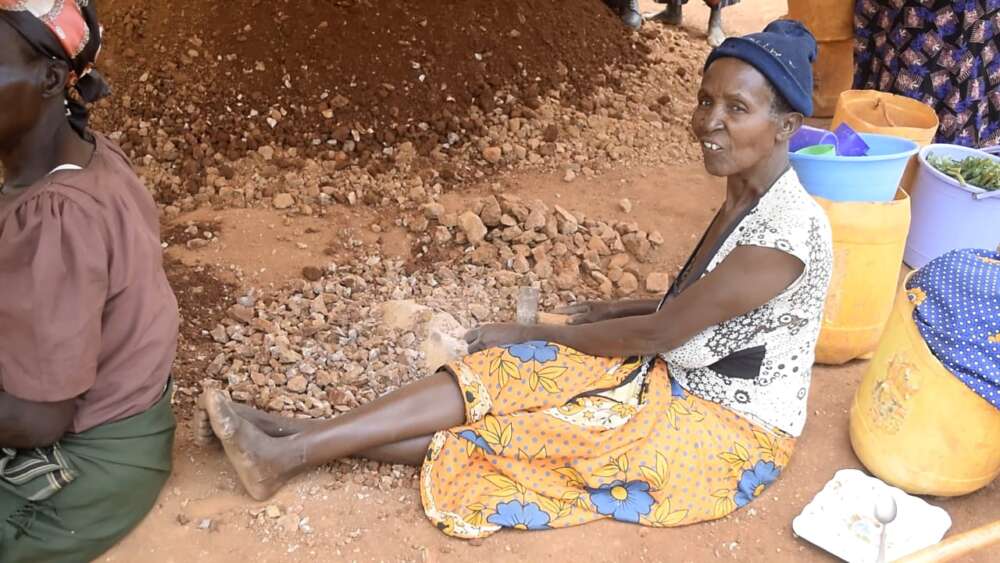
An investigative exposé by Africa Uncensored has revealed the shocking reality facing women working in the mines of Siaya County, where a practice known locally as “Apinde” has become normalized—a system in which sexual favors are exchanged for the stones that contain precious gold ore.
A County of Widows Struggling to Survive
Siaya County, located along the Busia-Kakamega greenstone belt—one of seven belts forming the wider Lake Victoria Greenstone Belt—sits atop significant gold deposits that have become both economic opportunity and humanitarian crisis. With an estimated population of approximately 1.1 million people, the county is home to nearly 50,000 widows, meaning one in every 25 residents has lost a spouse.
These women, many left destitute after their husbands’ deaths, have turned to artisanal gold mining as their last hope for survival. The Abimbo Mines in Bondo Sub-County have become ground zero for exploitation that operates in plain sight yet remains hidden from regulatory oversight.
The mining pits themselves present extraordinary dangers. Dug entirely by hand, some shafts plunge nearly 200 feet into unstable earth, with walls that threaten collapse at any moment. The physically demanding work of digging and extracting gold-bearing stones falls almost exclusively to young men possessing the strength to endure such harsh conditions.
This monopoly over extraction has placed these young men at the center of power within the mining economy—power they routinely abuse through sexual coercion.
“Apinde”: The Hidden Currency of Exploitation
According to women working in Abimbo who spoke to Africa Uncensored, the physical control men maintain over mining operations has given rise to “Apinde,” a term understood only within the community that refers to sex exchanged for access to the rocks containing gold ore.
“If a young man gives you stones, he expects sex in return,” one woman explained to investigators. “The behaviour is so normalised that refusal often means exclusion from any opportunity to earn from the mines.”
The women face a devastating dilemma: they are not permitted to choose the gold-bearing rocks themselves. Regardless of whether they attempt to pay for stones with sex or money, they remain vulnerable to exploitation at every stage of the process.
“It is the young, young men who do that job because they have the strength to dig and extract the stones. It is not an easy job,” stated one victim. “And that’s how the men take advantage of the women, since they are at the forefront of getting the best stones, and they get them in large amounts.”
The Trauma of Age-Inappropriate Exploitation
For older women, particularly widows in their forties and fifties, the exploitation carries additional psychological trauma. These women describe being approached by men young enough to be their sons, creating profound emotional distress alongside the physical violation.
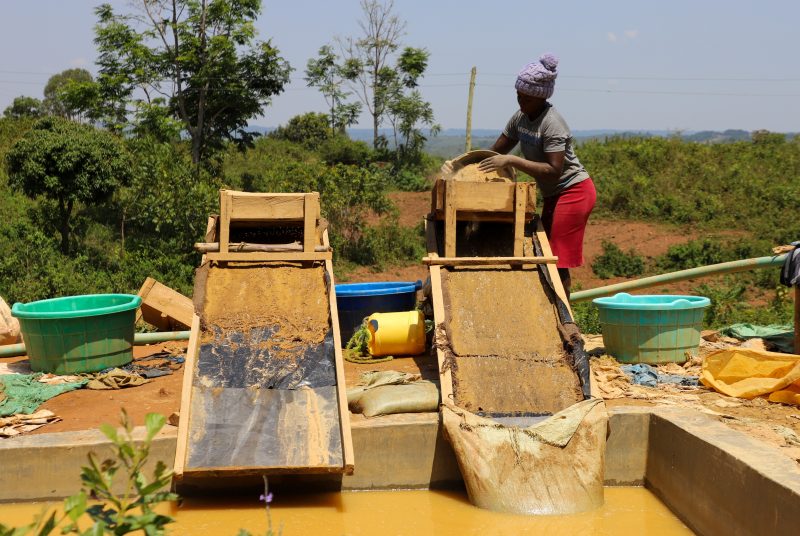
“At my age, I am 51 years old, and a young man is telling you he wants you to sleep with him in exchange for stones,” recounted one widow. “He is your child’s age; it’s very painful.”
Multiple women reported to Africa Uncensored that the mining pits themselves frequently serve as locations for sexual encounters, with abuse occurring even as miners descend into the dangerous shafts. The normalization of this exploitation has created an environment where resistance seems futile and dangerous.
A System That Targets All Vulnerable Women
The exploitation extends beyond widows to any woman seeking income from gold mining. As mining sites become exhausted and ore deposits diminish, women are forced to relocate to new pits in search of viable gold sources. At each new location, the same cycle of sexual coercion begins anew, trapping women in a perpetual pattern of abuse.
The health consequences prove equally devastating. Most male miners reportedly refuse to use protection during sexual encounters, dramatically increasing health risks for women who possess little bargaining power to negotiate safer practices.
According to a 2018 health report, Siaya County’s HIV prevalence stood at 15.35 percent—nearly three times the national average of 4.95 percent. Widowed women bear the heaviest disease burden, with prevalence rates reaching 26.4 percent compared to 15.7 percent among married women.
The connection between mining exploitation and HIV transmission appears direct and destructive. Women coerced into unprotected sex with multiple partners face exponentially increased infection risk, creating a public health crisis layered atop the human rights violations.
Substance Abuse Fuels Violence
A Public Inquiry Report by the Kenya National Commission on Human Rights found that exploitative sexual behavior has become common across many Kenyan mining areas, often intertwined with drug and substance abuse that exacerbates violence against women.
Women working in the Abimbo mines reported that male miners who smoke marijuana lose inhibitions and openly demand sex regardless of the woman’s age or circumstances. The combination of physical isolation, economic desperation, substance abuse, and unchecked male power creates conditions ripe for systematic abuse.
“The men who smoke marijuana have no restraint,” one woman explained. “They demand what they want, and we have no protection, no one to defend us.”
Deadly Consequences of Desperation
In attempts to escape sexual exploitation, some women have entered the mining pits themselves to extract stones directly. Yet even this desperate measure offers no guaranteed safety from either abuse or physical danger.
On March 3, 2023, tragedy struck when at least five female artisanal miners died after a prohibited gold mine collapsed in Lumba Village, Rarieda Sub-County. The women had entered the banned mine—likely deemed too dangerous even by the minimal standards of artisanal mining—in their desperate search for income independent of male-controlled distribution systems.
The deaths highlighted both the physical dangers of unregulated mining and the desperation driving women to take extraordinary risks to avoid sexual exploitation. Rather than submit to “Apinde,” these women chose to risk their lives in unstable pits—a choice that proved fatal.
Regulatory Failure and Government Inaction
Despite clear evidence of systematic exploitation, regulatory oversight of artisanal mining in Siaya County remains virtually nonexistent. The Mining Act and related legislation contain provisions intended to protect workers and regulate mining operations, yet enforcement at the artisanal level proves nearly absent.
The Kenya National Commission on Human Rights report documented exploitative practices but has yet to produce meaningful intervention or accountability. Local government authorities appear either unaware of conditions in the mines or unwilling to confront the powerful economic interests that profit from the exploitation.
Women’s rights organizations have called for immediate government intervention, including mandatory registration of mining sites, regular inspections, enforcement of labor protections, prosecution of sexual exploitation, and economic support programs for widows and vulnerable women.
Economic Desperation as Root Cause
At its foundation, the exploitation in Siaya’s gold mines stems from extreme poverty and limited economic alternatives for women, particularly widows. Traditional inheritance practices and social structures often leave women destitute after their husbands die, with few legal protections or support systems.
Gold mining, despite its dangers and degradation, represents one of the only available income sources in a county with limited formal employment opportunities. This economic desperation creates the conditions that allow systematic sexual exploitation to flourish.
Without addressing the underlying poverty and lack of economic alternatives, efforts to combat sexual exploitation in the mines may prove ineffective. Women need viable income options that do not require entering dangerous, unregulated mining operations controlled by men who exploit their vulnerability.
Calls for Immediate Action
Human rights advocates have outlined urgent interventions needed to protect women in Siaya’s mining sector:
Immediate enforcement of existing mining regulations, including closure of prohibited mines and prosecution of operators violating safety standards.
Criminal investigation of sexual exploitation in mining areas, with prosecutions under sexual offense laws that recognize economic coercion as removing meaningful consent.
Economic support programs specifically targeting widows and female-headed households to provide alternatives to dangerous artisanal mining.
Health services expansion, including HIV testing, treatment, and prevention programs specifically designed for women in mining communities.
Legal aid and advocacy services to help women understand and exercise their rights, including inheritance rights that might prevent post-widowhood destitution.
Community education programs addressing sexual exploitation, consent, and gender equality to challenge the normalization of “Apinde” and similar practices.
A Crisis Demanding National Attention
The systematic sexual exploitation occurring in Siaya County’s gold mines represents a profound human rights crisis that demands immediate national attention and intervention. Thousands of vulnerable women, many already traumatized by widowhood and poverty, face daily sexual coercion as the price of survival.
The practice of “Apinde” reveals the deadly intersection of gender inequality, economic desperation, regulatory failure, and social normalization of abuse. Women are trapped in a system where refusing sexual demands means losing access to income, while submitting increases health risks and psychological trauma.
The deaths of five women in the Lumba Village mine collapse demonstrated the lengths to which women will go to escape sexual exploitation—entering banned, unstable mines rather than submit to coercion. Their deaths should serve as a catalyst for urgent reform and protection.
Kenya’s government, civil society organizations, and international partners must recognize the crisis in Siaya’s mining sector and take immediate action to protect vulnerable women, prosecute exploiters, and provide economic alternatives that restore dignity and agency to those currently trapped in this brutal system.
The women of Siaya deserve better than a choice between sexual exploitation and starvation. Their survival should not depend on submitting to abuse in dark mining pits. Justice demands nothing less than comprehensive intervention to end this hidden economy of exploitation and restore fundamental human rights to those who have suffered far too long in silence.





VIDEO: Every Goal Scored in the Premier League This Weekend — Matchweek 30

EPRA Sets Fuel Prices for March-April 2026 — Here Is What You Will Pay

Israeli Government Announces Fully Funded Postgraduate Scholarships for Kenyans

Russian TikToker’s Videos Include Encounter with Older Woman, Raising Further Consent Concerns

East Africa’s Richest Musicians 2025: The Wealth Rankings Revealed

Why Gachagua Was Absent at Raila’s Farewell, According to His Camp
-

 Gossip6 days ago
VIDEOS: What Happened In Naivasha During The Weekend Has Boyfriends Crying
-

 Gossip1 week ago
VIDEO: Kenyan Female Chemist Attendant Goes Viral After Video Shows Her Helping Male Customer Put On Protection — Public Reacts
-

 Gossip1 week ago
Morara Kebaso’s Secret Mombasa Getaway With Slay Queen Laid Bare in Shocking Audio Leak
-

 Gossip1 week ago
Watch Video: Vihiga Man Takes Selfie Of Wife and Pastor During Mechi
-

 Gossip1 week ago
The Cheeky Couple Video That Broke Social Media This Week
-

 Mombasa1 week ago
VIDEO: Mackenzie’s Lawyer Challenges Police to Prove Shakahola Victims Are Not in Heaven
-

 Education1 week ago
How to Apply for Kenya Utalii College Through KUCCPS — Diploma and Certificate Applications Now Open
-
 Education6 days ago
Israeli Government Announces Fully Funded Postgraduate Scholarships for Kenyans