
Diaspora
Kenya Acquires Israeli SPYDER Air Defence System in Ksh3.4 Billion Deal
The Kenya Defence Forces have taken delivery of a sophisticated air defence platform manufactured by Rafael Advanced Defense Systems, significantly bolstering the nation’s capacity to neutralize airborne threats.
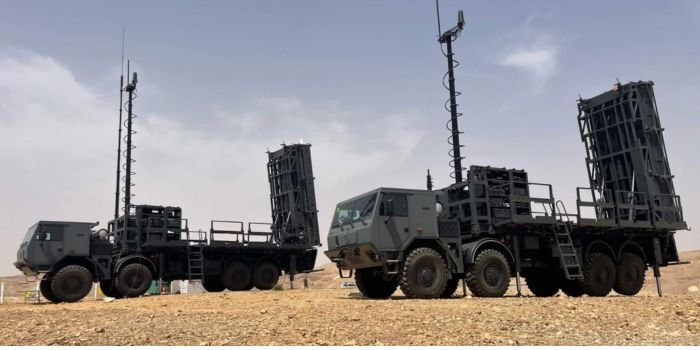
The SPYDER (Surface-to-air PYthon and DERby) system arrived in the country this month, according to sources familiar with the procurement, representing one of the most substantial upgrades to Kenya’s air defence infrastructure in recent years.
Financed Through Israeli Government Loan
The acquisition was made possible through a bilateral financing arrangement with Israel’s government, with the loan valued at approximately Ksh3.4 billion, equivalent to $26 million USD. President William Ruto’s administration finalized the agreement during negotiations held in July 2025.
This procurement strategy mirrors similar defence partnerships between African nations and Israel, allowing countries to access cutting-edge military technology through structured financing mechanisms rather than direct cash purchases.
Advanced Capabilities for Modern Threats
The newly acquired defence platform brings formidable technical specifications to Kenya’s military arsenal. As an all-weather, rapid-response system, it operates effectively regardless of environmental conditions and can function while mobile, detecting incoming threats during movement.

The system’s operational range extends up to 100 kilometres, providing substantial coverage over strategic areas. Its simultaneous multi-target engagement capability allows military operators to address several aerial threats at once, a critical feature in complex combat scenarios.
Among its most significant attributes is sophisticated counter-unmanned aerial vehicle technology. This capability has become increasingly vital as drones evolve into common tools for reconnaissance, surveillance, and even offensive operations in contemporary conflicts.
The platform executes 360-degree launches within moments of threat identification, offering comprehensive spatial coverage. Its dual engagement modes—allowing operators to lock onto targets either before or after missile launch—provide tactical flexibility depending on the specific threat scenario.
Technical Architecture
Rafael’s design incorporates radar technology from Israel Aerospace Industries’ Elta division. The system utilizes different radar configurations depending on the variant, with the EL/M-2106 ATAR serving short-range applications and the EL/M-2084 MMR handling medium-range requirements.
The platform employs two distinct missile types: Python-5 missiles using infrared homing guidance, and Derby missiles equipped with active radar homing. These missiles, originally developed for air-to-air combat, have been adapted for ground-launched applications. Various configurations achieve different operational ranges and altitude capabilities through the addition or omission of booster stages.
Strategic Context and Regional Security
Defence analysts interpret this acquisition as part of Kenya’s broader military modernization initiative, responding to evolving security dynamics across East Africa. The country faces persistent challenges from militant groups, particularly Al-Shabaab, which has demonstrated both conventional and asymmetric warfare capabilities.
The procurement also signals strengthening defence ties between Nairobi and Tel Aviv. This relationship has expanded beyond equipment sales to encompass intelligence cooperation, counter-terrorism training, and technology transfers across multiple security domains.
“This represents a strategic investment in capabilities that address both conventional aerial threats and emerging challenges like armed drones,” noted one security expert who requested anonymity due to the sensitive nature of military procurements.
Global Deployment and Regional Context
The SPYDER system has achieved international market success, with active deployments across multiple continents. India, Singapore, Morocco, and the Czech Republic currently operate variants of the platform. The Czech Republic’s adoption marked the first integration of SPYDER technology within NATO’s collective defence architecture.
Within Africa, Kenya becomes the third nation to field this particular system, joining Ethiopia and Morocco. This places Kenya in an exclusive group of African states possessing advanced medium-range air defence capabilities.
The acquisition positions Kenya’s air defence posture alongside nations with significantly larger defence budgets, potentially altering regional military calculations.
Implications for National Security
Military observers suggest the system will provide Kenya with credible deterrence against aerial incursions and enhance protection of critical infrastructure, government installations, and population centers. The counter-drone capabilities prove particularly relevant given the proliferation of unmanned systems across conflict zones in Somalia and the broader Horn of Africa region.
The platform’s mobility allows for flexible deployment, enabling defence planners to reposition assets based on evolving threat assessments rather than maintaining fixed installations that adversaries could potentially map and circumvent.
As Kenya continues its military modernization trajectory, this acquisition underscores the government’s commitment to investing in capabilities that address contemporary security challenges while maintaining interoperability with international partners engaged in regional stability operations.
The Defence Forces have not yet issued official statements regarding operational deployment plans or training timelines for personnel who will operate the new system.





VIDEO: Every Goal Scored in the Premier League This Weekend — Matchweek 30

EPRA Sets Fuel Prices for March-April 2026 — Here Is What You Will Pay

Israeli Government Announces Fully Funded Postgraduate Scholarships for Kenyans

Russian TikToker’s Videos Include Encounter with Older Woman, Raising Further Consent Concerns

East Africa’s Richest Musicians 2025: The Wealth Rankings Revealed

Why Gachagua Was Absent at Raila’s Farewell, According to His Camp
-

 Gossip6 days ago
VIDEOS: What Happened In Naivasha During The Weekend Has Boyfriends Crying
-

 Gossip1 week ago
VIDEO: Kenyan Female Chemist Attendant Goes Viral After Video Shows Her Helping Male Customer Put On Protection — Public Reacts
-

 Gossip1 week ago
Morara Kebaso’s Secret Mombasa Getaway With Slay Queen Laid Bare in Shocking Audio Leak
-

 Gossip1 week ago
Watch Video: Vihiga Man Takes Selfie Of Wife and Pastor During Mechi
-

 Gossip1 week ago
The Cheeky Couple Video That Broke Social Media This Week
-

 Mombasa1 week ago
VIDEO: Mackenzie’s Lawyer Challenges Police to Prove Shakahola Victims Are Not in Heaven
-

 Education1 week ago
How to Apply for Kenya Utalii College Through KUCCPS — Diploma and Certificate Applications Now Open
-
 Education6 days ago
Israeli Government Announces Fully Funded Postgraduate Scholarships for Kenyans